Kids absolutely love getting their hands dirty, but what if that messy play could actually teach them foundational physics and more? Oobleck can be used for sensory play and educational science experiments. In this article, we’ll explore the many uses of oobleck for parents, teachers, and kids, including hands-on science, creative activities, and even real-world applications like body armour and shock absorption. Understanding oobleck’s uses matters because it offers a fun, interactive way to learn about physics, states of matter, and the science behind materials that have practical value in everyday life. Whether you’re looking for engaging classroom activities, at-home experiments, or inspiration for creative play, discovering what oobleck is used for will spark curiosity and connect science to the real world.
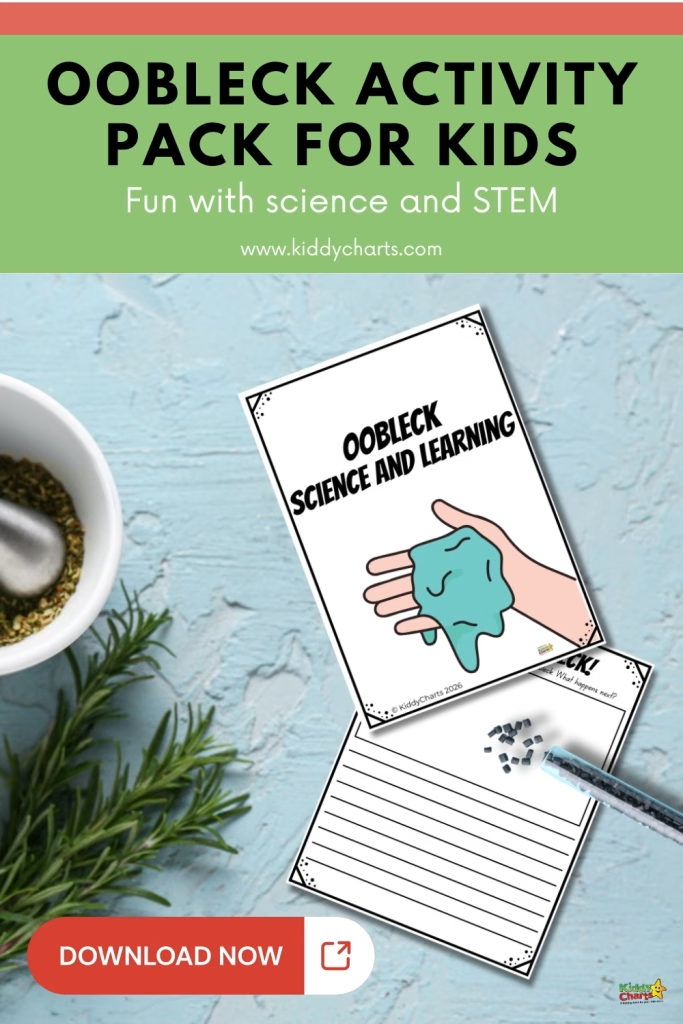
Before you dive into our fabulous new science and learning printable, you will need to whip up a batch. Head over to read our simple guide on how to make oobleck on the KiddyCharts site to get your mixture perfectly prepped. Just mix the ingredients together until you reach the right consistency.
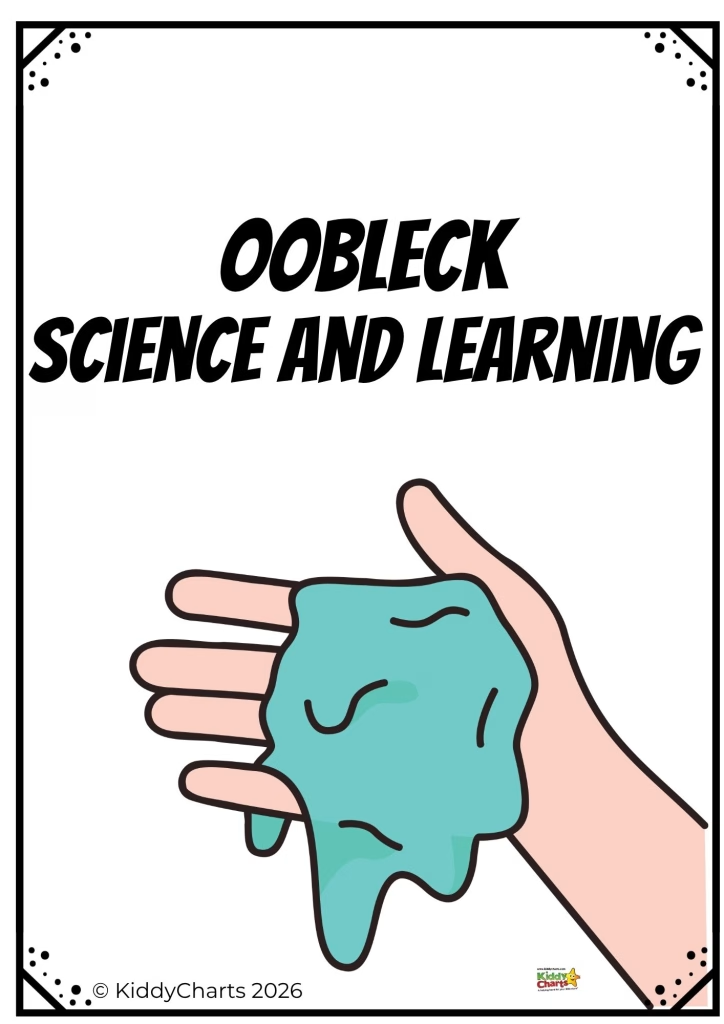
Once your gooey concoction is ready, grab our printable by scolling down to the image and button below, and let the learning begin. Here is a breakdown of all the brilliant activities included in the pack and how they support your child’s learning journey.
Tip: For an extra fun twist, oobleck can glow under a black light if you make it with tonic water, which contains quinine.
Introduction to Oobleck
Oobleck is a truly fascinating non-Newtonian fluid that you can create right at home with just cornstarch and water. This gooey substance is famous for its unpredictable behavior: when you apply pressure or force, oobleck feels solid, but as soon as you let go, it flows like a liquid. Oobleck is a colloid, which means it consists of small particles of cornstarch suspended in water without being chemically bonded. This makes oobleck a perfect example of a non-Newtonian fluid, where the viscosity, or thickness, changes depending on how much force you use.
The behavior of oobleck can be explained by the interactions of its starch particles, which can lock together under stress, causing the fluid to thicken and behave more like a solid. Scientists, including those supported by the National Science Foundation, study non-Newtonian fluids like oobleck to better understand their unique properties and how they respond to different types of pressure. Exploring oobleck is not only fun, but it also gives kids and adults alike a hands-on way to discover the surprising science behind this remarkable mixture.
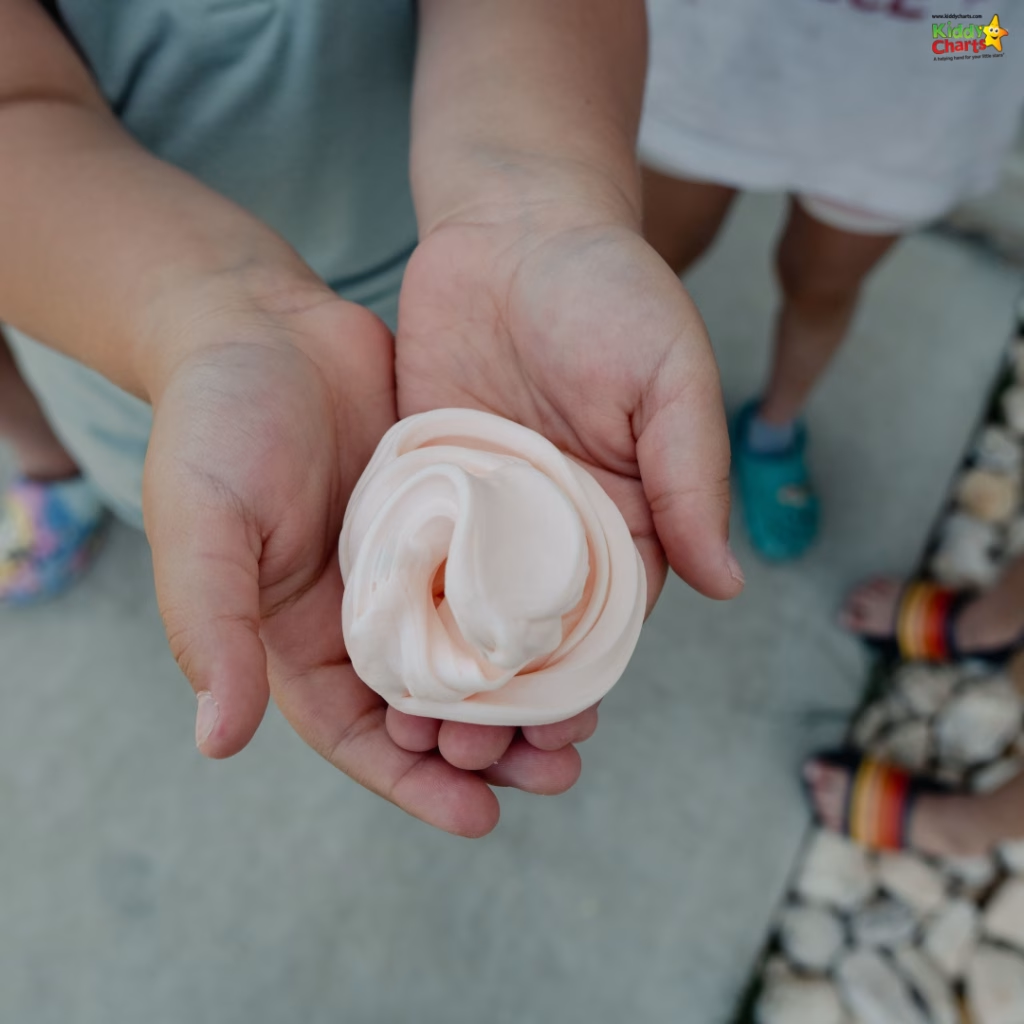
Making Oobleck
Making oobleck is as easy as it is entertaining! All you need is cornstarch, water, and a little creativity. Start by mixing 2 parts cornstarch with 1 part water in a bowl or container. Stir the mixture slowly with a spoon, adding the water bit by bit until you reach the right consistency: a thick, gooey substance that feels solid when you squeeze it, but turns runny when you let it dribble through your fingers. For extra fun, add a few drops of food coloring or food dye to create a vibrant, colorful oobleck that kids will love to play with, just like other simple STEM projects such as our kids’ rock tumbler science activities. Once you’ve created your oobleck, be sure to store it in an airtight container to keep it from drying out, so you can enjoy the fun again and again!
Understanding the states of matter
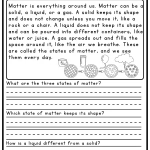
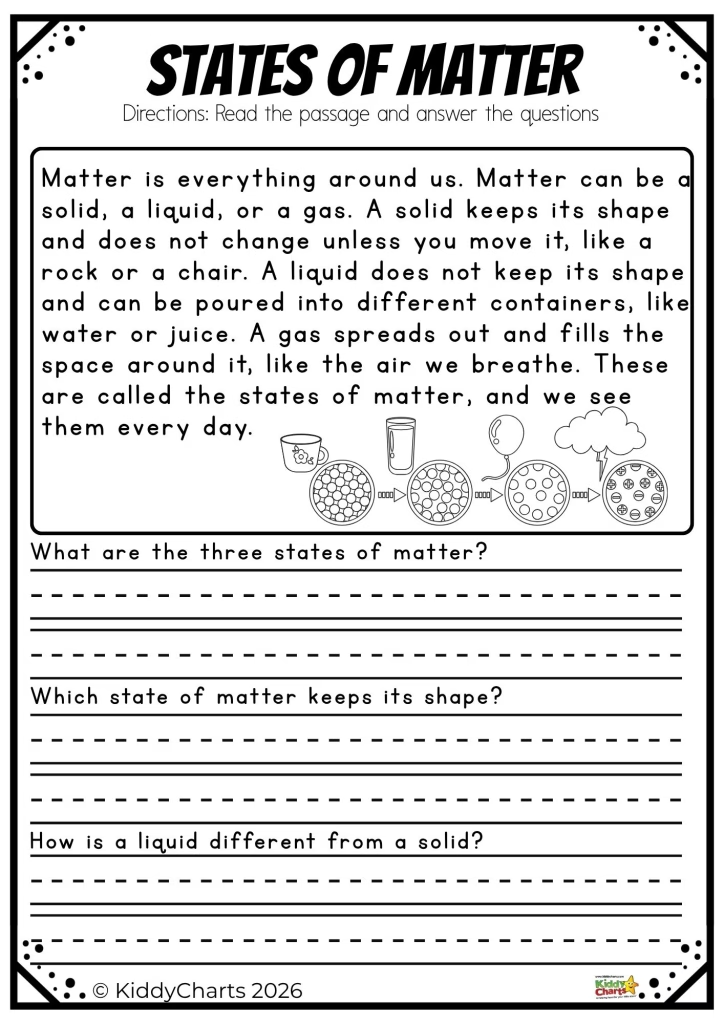
Before getting stuck into the messy stuff, it helps to understand the science behind it. Our printable kicks off with a clear, child-friendly reading passage explaining the differences between solids, liquids, and gases.
This section builds essential reading comprehension skills while introducing core scientific concepts. Children learn that solids keep their shape, liquids flow and take the shape of their containers, and gases spread out to fill the space around them. Oobleck helps students understand that materials can behave as both solids and liquids.
You can easily bring this to life by pointing out everyday objects around the kitchen, like an ice cube melting into water. If you are working with a group of children, this acts as a fantastic discussion starter to get them observing the room and categorising objects into different states of matter before asking the ultimate trick question: which category does oobleck fall into?
Oobleck is a suspension and a colloid, consisting of small particles of cornstarch (a type of starch) suspended in water without being chemically bonded. This unique mixture demonstrates how the starch particles interact under different forces, giving oobleck its unusual properties.
Properties of non Newtonian fluids
Non-Newtonian fluids like oobleck are full of surprises….Unlike regular liquids, their viscosity changes when you apply a force. For example, when you hit or squeeze oobleck, the solid particles of cornstarch lock together, making it feel solid. But when you let it rest or move it slowly, it flows like a liquid. This response to shear force, how the fluid reacts to being stirred, pressed, or pulled, is what makes non-Newtonian fluids so interesting. Other non-Newtonian fluids, such as ketchup and paint, behave differently but share this ability to change their flow depending on the force applied. The friction between the particles in oobleck is what causes it to resist sudden movements, giving it its unique properties. Understanding how oobleck behaves helps scientists and engineers develop new materials that can protect or adapt to different forces, making non-Newtonian fluids an exciting area of research.
Hands-on Oobleck observation: Exploring a non Newtonian fluid
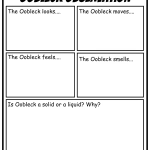
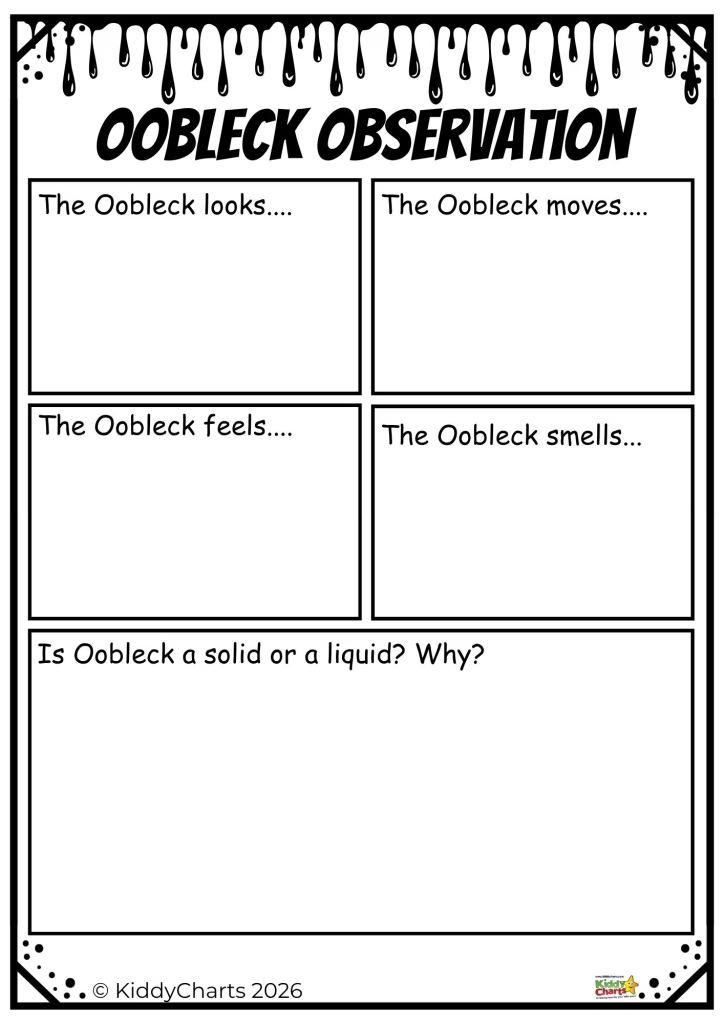
Science is all about observation. The observation sheet encourages kids to engage all their senses to describe their mixture. They will need to record how the oobleck looks, feels, smells, moves, and even what sounds it makes during play.
This activity is fantastic for developing descriptive vocabulary and fine motor skills as they squish and poke the mixture. When squeezed or pressed, oobleck feels thicker and more resistant, demonstrating its unique non-Newtonian properties. Asking children to articulate whether they think it is a solid or a liquid based on their direct observations pushes them to use critical thinking and provide evidence for their answers.
To expand on this, encourage the use of vivid adjectives. Instead of just saying it feels “weird”, prompt them to decide if it feels chalky, smooth, hard, runny, or thicker when pressure is applied. It is a wonderful way to blend sensory play with language development, making it highly effective for both an afternoon activity at the kitchen table or an interactive messy tray station.
As a practical tip, if any oobleck dries on surfaces or the floor, it can be easily vacuumed or swept up.
The sink or float experiment
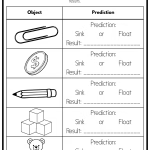
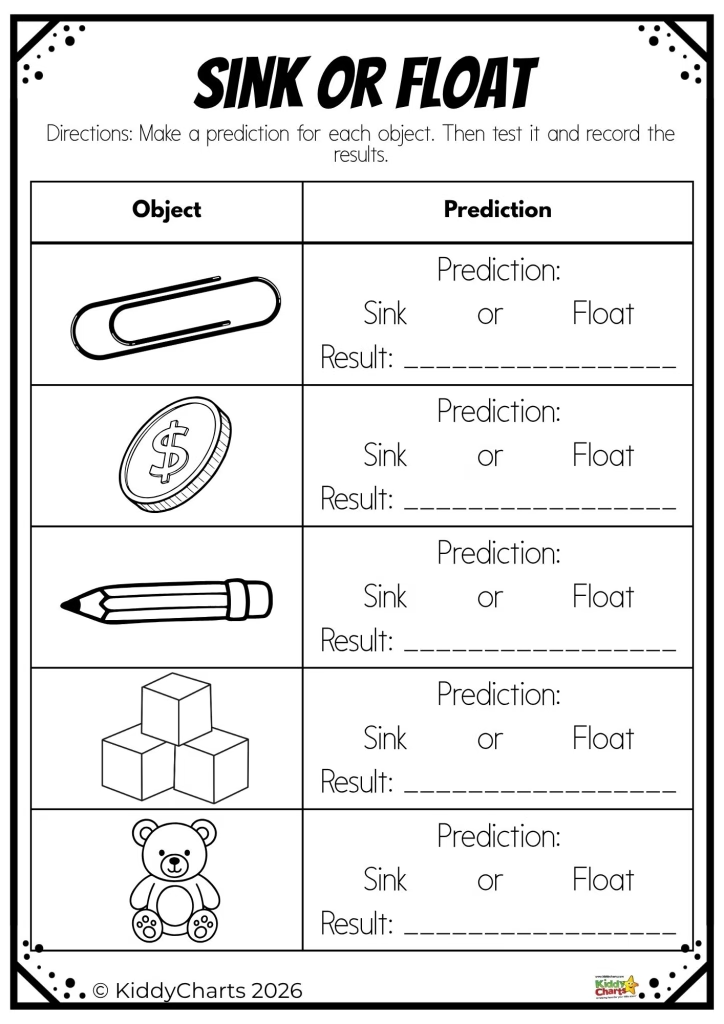
One of the most classic science experiments gets a fascinating twist when you swap out water for a non-Newtonian fluid. The sink or float activity sheet prompts children to gather various small objects, predict what will happen to each one, and then test their hypotheses. When setting up the experiment, you can vary the concentration of cornstarch in the oobleck mixture, changing the concentration will affect how thick the fluid is and how it responds to objects, influencing the results.
This perfectly introduces the scientific method: making a prediction, testing it, and recording the results. Because oobleck has such a unique density and surface tension, the results often surprise children. Objects experience resistance when moving through oobleck; for example, a heavy coin might rest on the surface if placed gently, but sink rapidly if pushed, due to the increased resistance the fluid provides under sudden force.
Simply gather a few safe items like:
- a plastic building brick
- a metal spoon
- a wooden peg
- a rubber ball
Having children record their findings helps them practice data collection, turning a simple game into a structured learning experience that works brilliantly with siblings at home or in small learning groups. Oobleck can also absorb impact energy, making it suitable for applications in shock absorption.
Freeze it! Exploring temperature changes
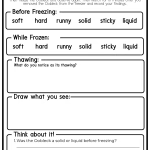
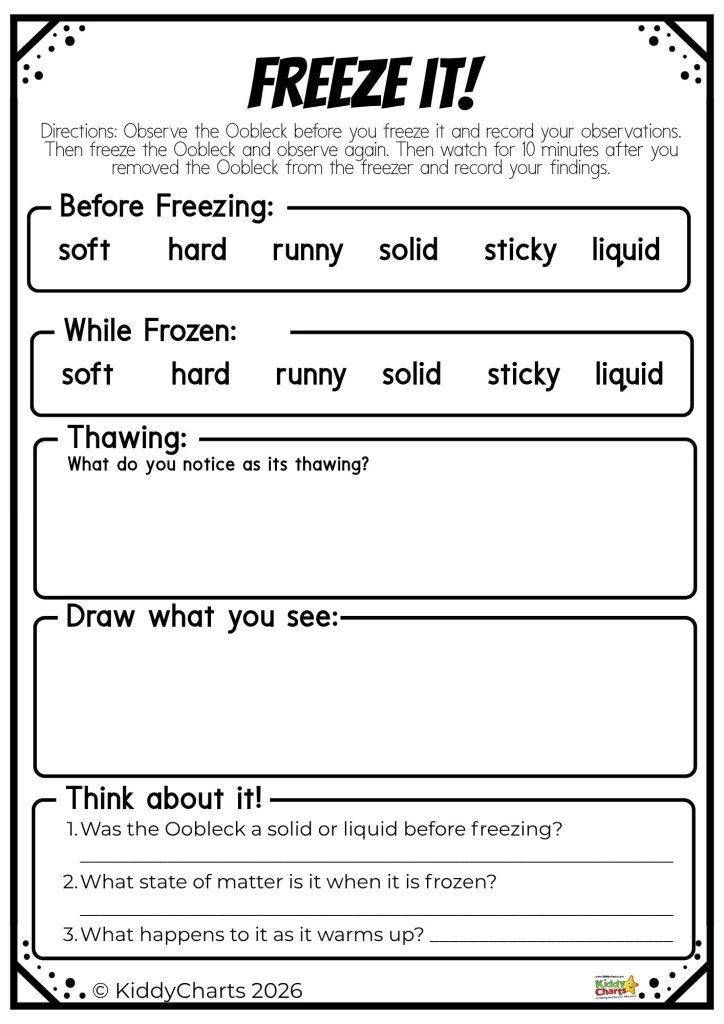
What happens to a non-Newtonian fluid when the temperature drops drastically? The ‘Freeze It!’ activity page guides young scientists through observing the mixture before freezing, while solid frozen, and during the thawing process.
Children check off descriptive words: like soft, hard, runny, solid, sticky, or liquid, at each stage. When oobleck is frozen, it will harden, transitioning from a liquid-like to a solid-like state. They also get to draw what they see as the mixture thaws out. This teaches children about reversible changes and how temperature affects states of matter.
A challenge in this activity is carefully observing and describing the changes that occur as oobleck hardens in the freezer and then softens again during thawing. This is an excellent lesson in patience and long-term observation. You can easily set this up in the morning, pop the container in the freezer, and return to it after lunch. Watching the thawing process opens up great conversations about melting points and whether the mixture returns to its exact original state.
For more fun, try making an oobleck fountain using kitchen tools like colanders and buckets to create an interactive experience for children.
Uses of Oobleck
Oobleck isn’t just for messy play, it’s a versatile material with lots of creative, educational, and even real-world uses. Here’s how oobleck can be used in different ways:
Sensory play
- Kids can explore the properties of oobleck by squeezing, poking, and letting it slowly sink through their fingers, learning about viscosity and friction in a hands-on way.
Science experiments
- Oobleck is a fantastic tool for science experiments, such as testing how different objects move through the mixture or observing how it reacts to different types of force.
- Try mixing in baking soda and then adding a liquid like vinegar to watch your oobleck fizz and bubble: an exciting example of a chemical reaction.
Art projects
- Oobleck can even be used in art projects, letting kids create colorful patterns and textures, much like crafting a miniature clay house in a creative challenge.
Shock absorption and real-world applications
- Oobleck can absorb impact energy, making it suitable for applications in shock absorption.
- Non-Newtonian fluids like oobleck can be used in body armor that hardens upon impact while remaining flexible under normal movement.
- The principles of oobleck-like fluids have significant real-world applications across various fields including protective gear and body armor.
- Some innovative speed bumps utilize shear-thickening fluids to remain soft under slow vehicles and harden upon faster vehicles.
Whether you’re experimenting, playing, or creating, oobleck offers endless opportunities for fun and learning.
Connecting Oobleck’s properties to real-world applications
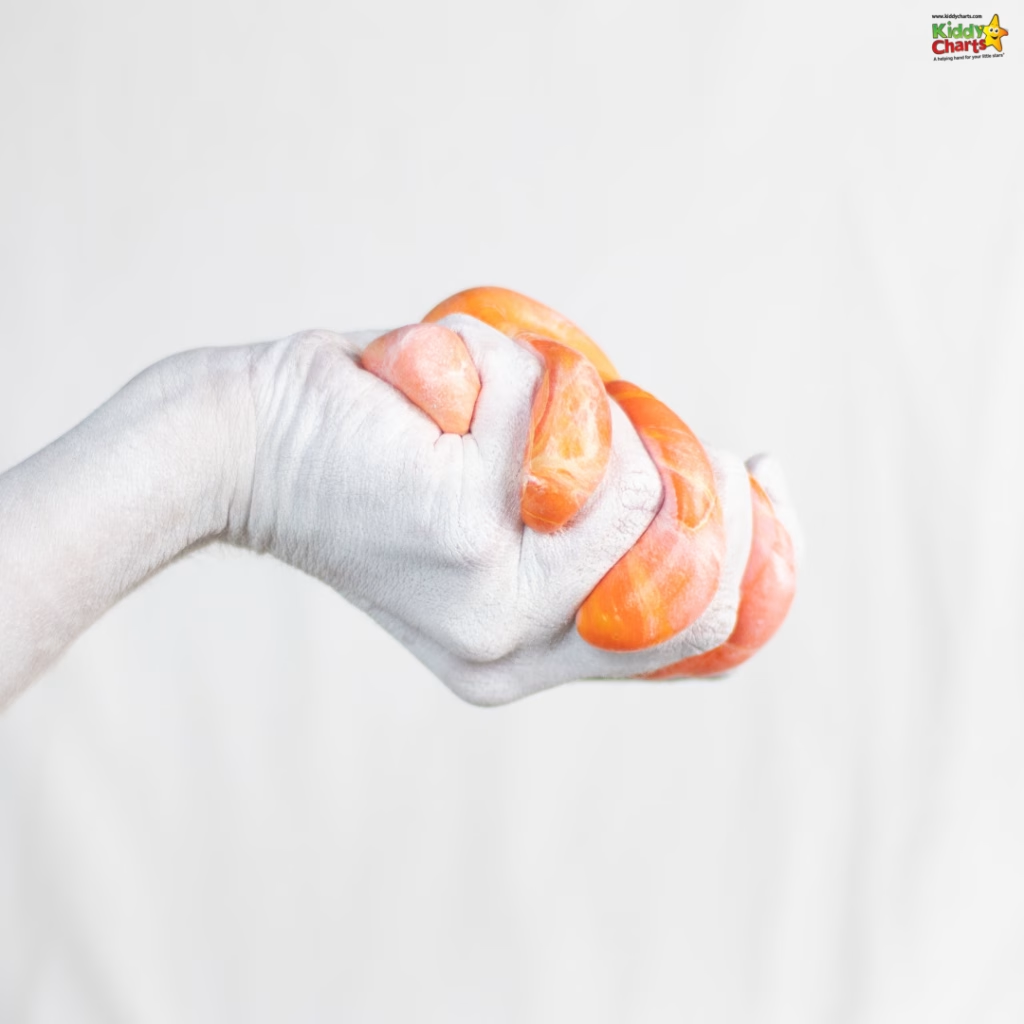
Oobleck’s unique properties, thickening under stress and flowing when at rest, make it more than just a fun science experiment. These same principles are used in advanced technology and engineering. For example, body armor made with non-Newtonian fluids like oobleck remains flexible during normal movement but instantly hardens to protect against sudden impacts. Oobleck’s ability to absorb shock is also harnessed in protective gear and innovative speed bumps that adapt to the speed of vehicles. By exploring oobleck, kids and adults alike can see firsthand how scientific concepts translate into real-world solutions for safety and innovation.
Stuck in Oobleck! Creative storytelling
Creative writing prompt: Stuck in a room of Oobleck
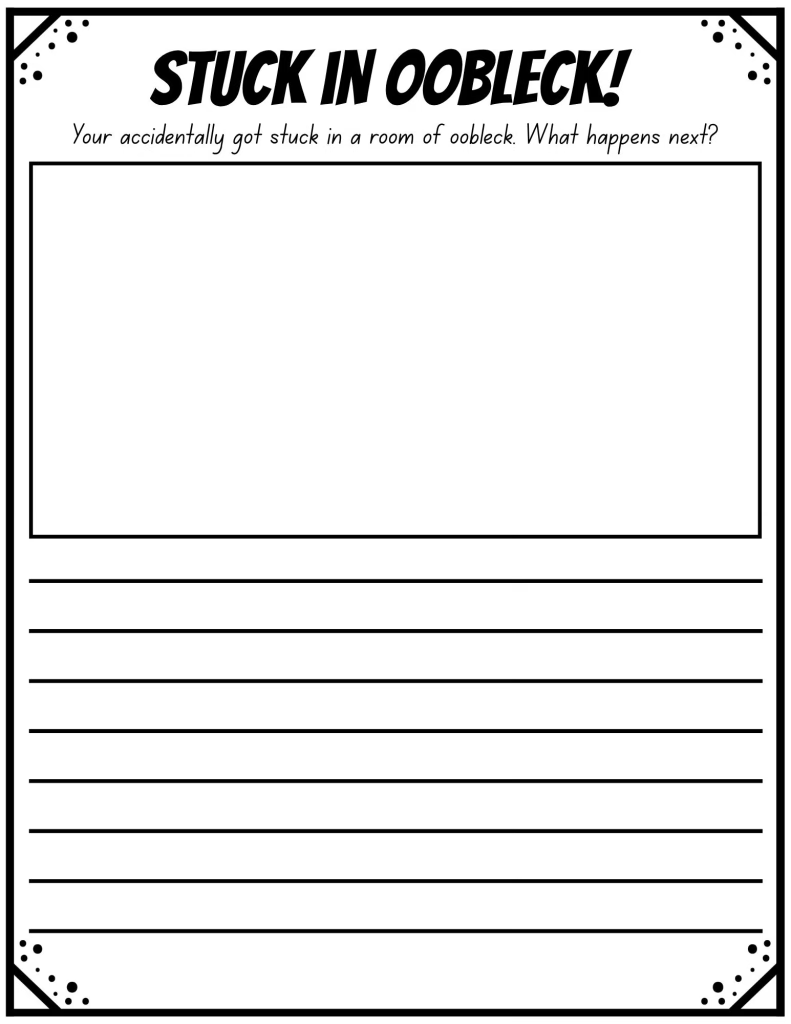
Science and literacy go hand in hand perfectly. One of our pages of the printable features a fantastic creative writing prompt: “You accidentally got stuck in a room of oobleck. What happens next?”
After spending time feeling how difficult it is to pull your fingers out of the mixture quickly, children will have plenty of sensory experiences to draw upon for their stories. When they attempt a sudden change in movement, like trying to run quickly across the surface, they’ll notice the oobleck resists and behaves almost solid, while moving slowly lets them sink to the bottom.
This encourages imaginative thinking and narrative building. It is a brilliant way to wind down after the messy play is tidied away. Getting kids to write about their experiences helps solidify what they have learned physically, making it a highly versatile task for reinforcing literacy skills alongside STEM concepts.
Using oobleck is about so much more than just making a mess. It is an invitation to predict, observe, describe, and imagine. As a practical note, oobleck does not last long if not stored properly, it can develop mould within a few days. Grab your cornflour, print out these activities, and enjoy watching your little scientists at work!
Cleanup tip: Do not pour oobleck down the sink drain, as it can solidify and cause severe clogs. Instead, dispose of it in the trash.
Further Exploration and Resources
If you’re curious to dive deeper into the world of oobleck and other non-Newtonian fluids, there’s a wealth of resources to explore. The National Science Foundation supports research into these fascinating substances, and you can find plenty of educational materials and videos online to help you experiment at home or in the classroom. Try making your own versions of other non-Newtonian fluids, like slime, goop, or suspensions of solid particles in a liquid, to compare how each one behaves. Exploring the physics behind these materials, such as how solid particles interact, how viscosity changes, and how different forces affect their flow, can lead to exciting discoveries. For more inspiration, check out science websites, our own STEM activities, and crafts, forums, and tutorials dedicated to hands-on experiments and creative play with non-Newtonian fluids. The more you experiment, the more you’ll uncover just what makes these gooey, shape-shifting substances so much fun!
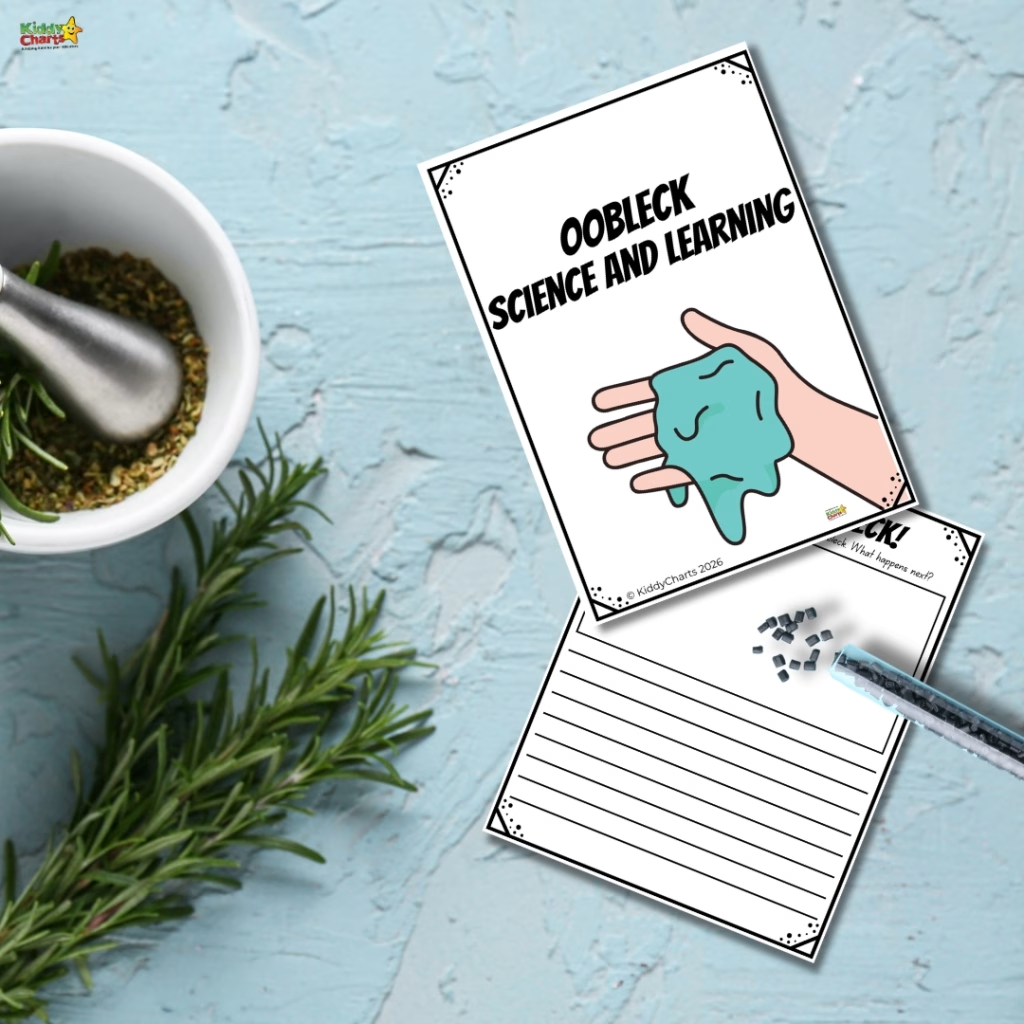
Now – click on the image or the button to download the activity pack, as well as exploring some of the other crafty ideas that we have on the site below:
Check out these other ideas on the KiddyCharts site for science and beyond too:
Science related activities and printables
Here are some more science activities to get stuck in to today.
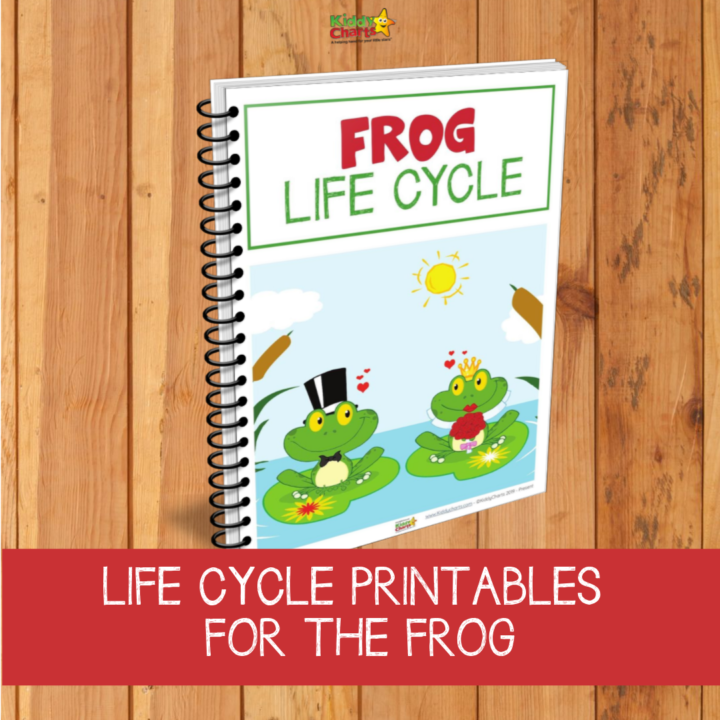
Frog life cycle printables: Get to know your tadpoles!
So what is the frog and tadpole life cycle all about - we've got activity sheets to help learn about it all.
Ladybug Life cycle: Free printables for writing, math and fun!
The ladybird lifecycle is just as interesting as the flog - why not take a look here?
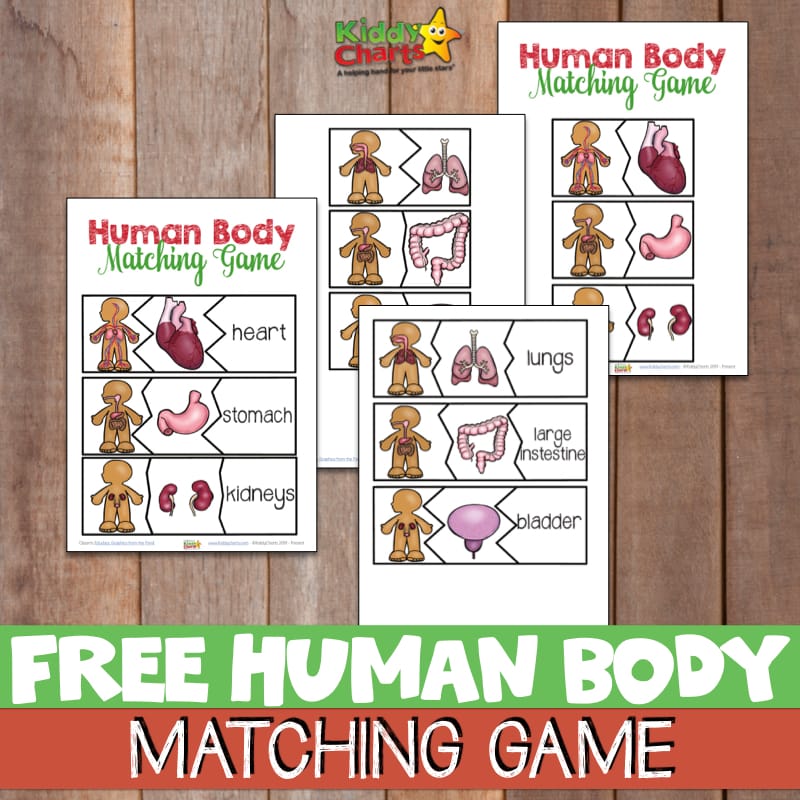
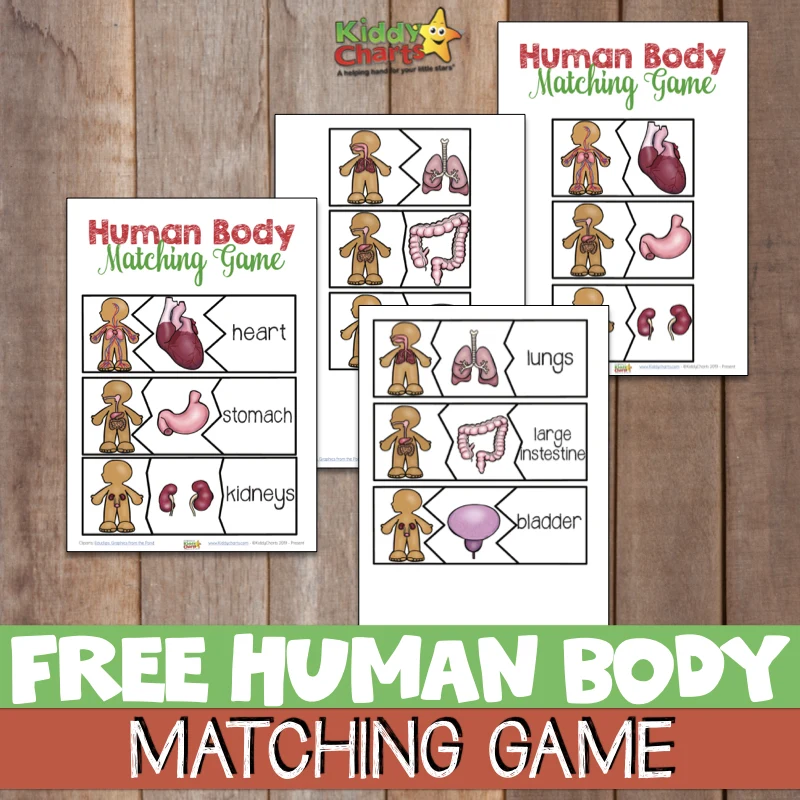
Human body matching game - Free printable
We have a human body matching game to help kids to learn all about their bodies.
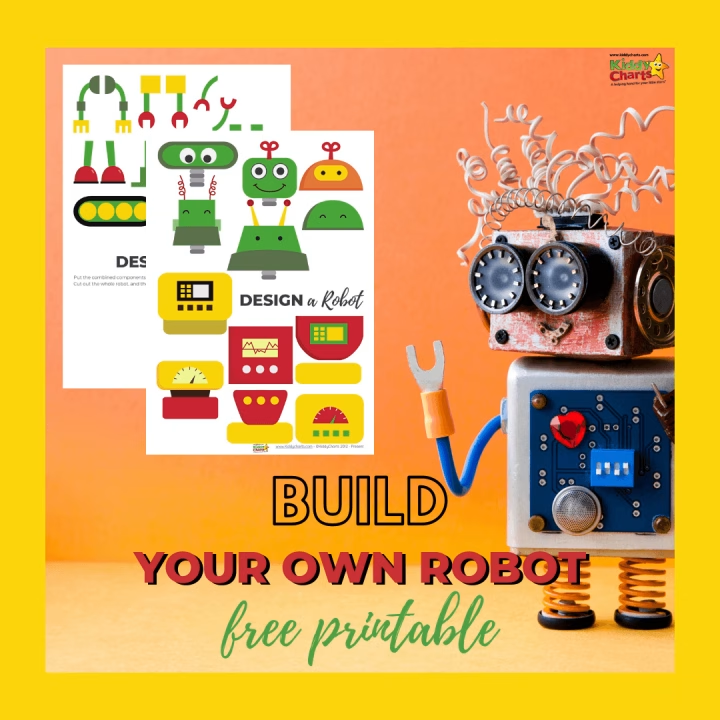
Build your own robot free STEM printable
Fancy building a robot? We have a printable to help!
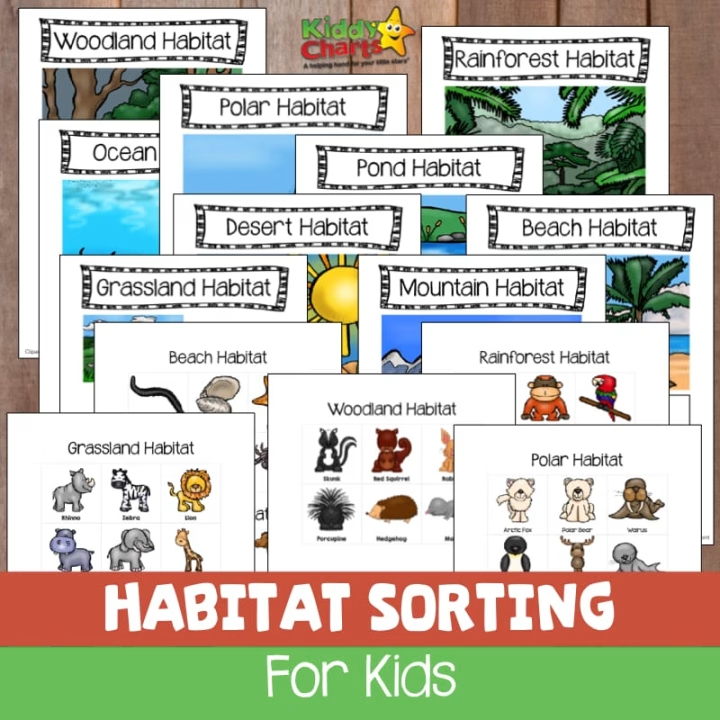
Animal habitats sorting game for kids: Free printable
This is our most popular printable activity - take a look and have some fun with us today.
Thanks as always for stopping by, and we do hope we can see you again soon.
Helen
Helen Neale

Helen is a mum to two, social media consultant, website editor and a qualified counsellor with experience of working with both children and adults. She is a registered member of the British Association of Counselling and Psychotherapists, with her own private practise. She also freelances with her local Mind organisation. Since giving up being a business analyst when juggling travel, work and kids proved too complicated, she founded KiddyCharts so she could be with her kids, use those grey cells at the same time, and supplement her counselling income. KiddyCharts has reach of over 680k across socials and the site. The site works with big family brands to help promote their services, as well as offering free resources to parents of kids under 10. She is a specialist counsellor for neurodivergent individuals and brings this expertise to her resources and the site. She is also an ADHDer herself. KiddyCharts gives 51%+ profits to charities, focused on supporting mental health and a community in Tanzania Helen has also worked as a digital marketing consultant (IDM qualified) with various organisations, including Channel Mum, Truprint, Talk to Mums, and Micro Scooters. She loves to be creative in the brand campaigns she works on. Get in touch TODAY!