
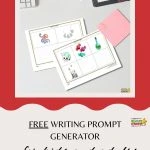




We have an exciting new release – you again for you – a writing prompt generator to help you get creative with writing stories at home, in the classroom, and everywhere you want:
You can have a play with this yourself, and see how you want to use it. Alternatively, take a look below, and we will show you how we intended it to be used. However this is really a creative tool to use in whatever way fits with your home, or classroom, so you are free to use it in whatever way you would like.

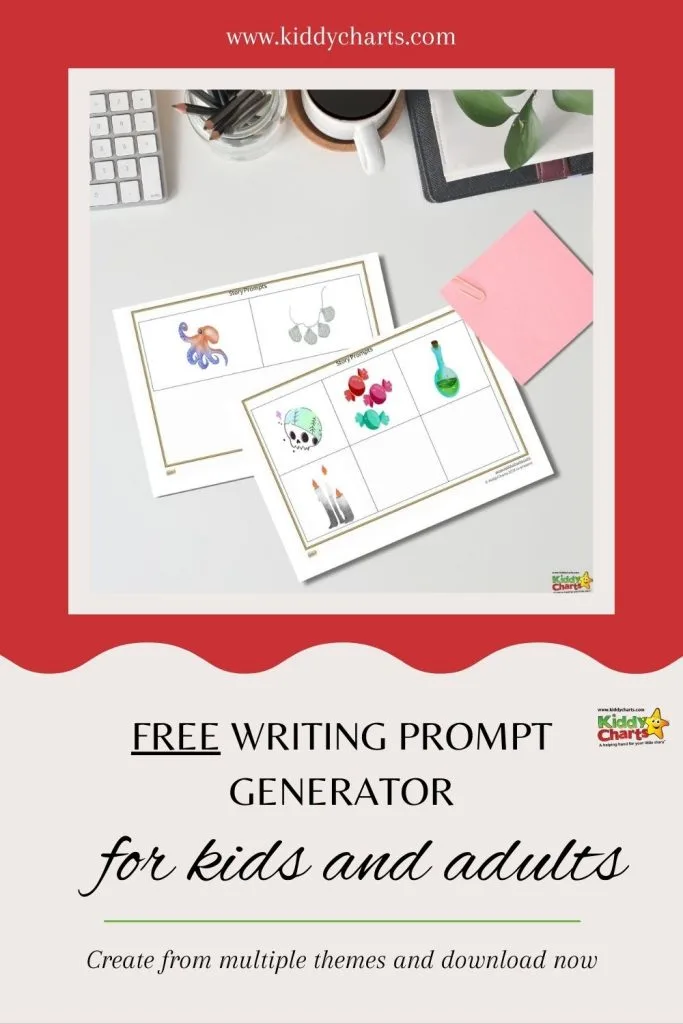
How to use our personalised writing prompts tool
Using our writing prompt generator couldn’t be simpler. The tool walks you through three easy steps to create your writing.
Whether you’re a student looking for a classroom project, students working on school assignments, or a professional writer seeking new inspiration, our prompts are designed to spark creativity. You can also share your favorite prompts with friends for collaborative writing and group storytelling.
Our tool helps you explore, discover, and create. Use it to imagine new worlds, dream up unique stories, and push the boundaries of your creativity.
You can adapt the idea for each prompt to your own voice and imagination. The tool makes it easy to get started on your first draft of a story: remember, every story begins with that draft, and our image prompts help you take that important first step.
Introduction to the Tool
If you’re searching for a spark of writing inspiration for your kids, or a way to break through creative blocks as an adult, our writing prompt generator is a great companion. Designed for writers of all ages and experience levels, this tool offers over unlimited image creative writing prompts to help you discover new ideas and bring stories to life. Whether you’re hoping to craft a short story, start a novel, write a poem, or simply explore different genres, the generator is packed with image prompts that can be tailored to your interests and writing style.
Writers, teachers, and children can use the tool to explore fresh story concepts, experiment with new genres, and develop their creative craft. Each sheet of image prompts is personalised, allowing you to adapt it to your own voice and imagination. You can therefore create stories that are uniquely yours. Whether you’re a student looking for a classroom project, a professional writer seeking new inspiration, or someone who just loves to write for fun, the tool is designed to help you explore, discover, and create.
Why not your imagination roam free and see where these image prompts can take your next story?
Step 1: Choose Your Theme
Start by selecting an overall theme that matches your personality or interests.
You can pick from over 60 ideas, or scroll down to the end of the list to select the random option which looks across themes.
Whether you’re drawn to fairies, autumn themes, America, or dragons, which is of course, my personal favourite, there’s a theme that will capture your imagination. Some themes might even surprise you with unexpected story ideas.
For kids, this might mean choosing between pirates, princesses, or animals, while adults might gravitate toward cooking or just something completely random.
When choosing a theme, you can describe your favorite characters or settings inspired by the theme, bringing your stories to life with vivid details.
You can also experiment with different formats for your stories, such as letters, poems, or diary entries, depending on the theme you choose.
Step 2: Select the number of images
Next, decide how many images you’d like included in your writing prompt. You can choose anywhere from 1 to 6 images, depending on how much visual inspiration you want. Younger children might benefit from more images as they provide concrete starting points for their stories, and can help with filling in the blanks or spaces in their story using their own images as inspiration. Encourage children to describe what they see in the images, and even imagine what sounds they might hear in their scenes. Writers can also make a note of interesting details they notice in the images to include in their stories, adding depth and creativity to their writing. More experienced writers may want fewer images to leave more room for their own interpretations.
Step 3: Pick your page count
Finally, choose how many pages you want. Each page will have a different set of writing prompts, so if tyou are doing for a class, or a few siblings, then you will probably want a few pages printed at once. Selecting your page count helps you feel prepared to tackle your writing session, ensuring you have enough material for everyone involved.
Options range from 1 to 4 pages, and by choosing the right number of pages, you can complete a full story or set of prompts.
Once you’ve made all of these selections, the tool generates unique writing prompts tailored to your input, ready to kickstart your writing.
What does the writing prompt look like?
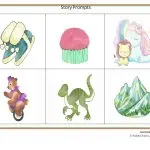
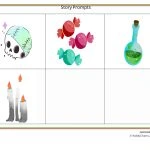
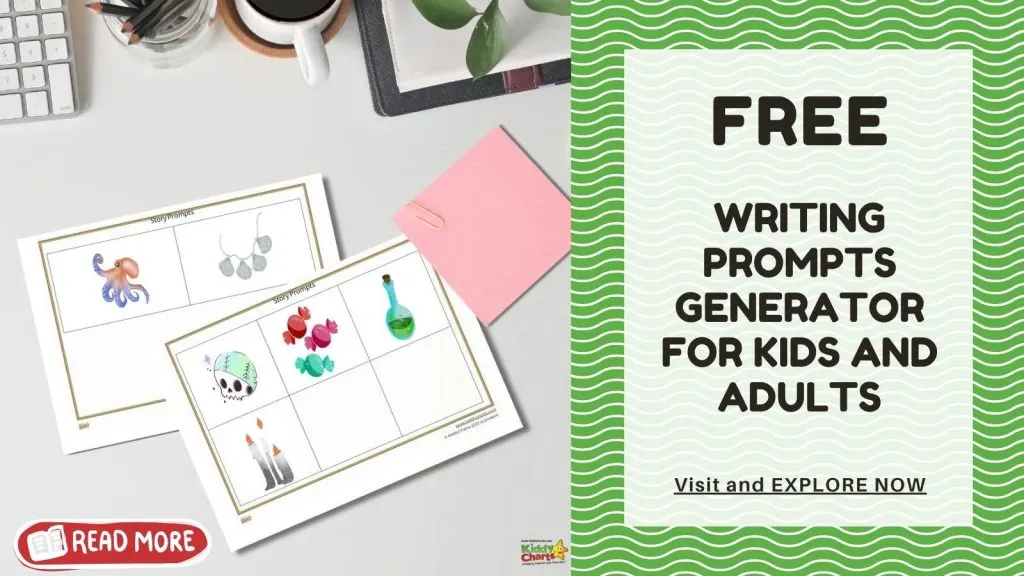
We obviously want you to be able to see what our writing prompts look like – so here are a couple that we have created for you with different numbers of images, so you can take a look. When viewing the images, try to describe what you see: think about the characters, the settings, or even the emotions they might represent.
After viewing the writing prompts, you might think about writing a letter or letters to a character or friend, or to imagine a scene set in a museum, during a game, at dinner, or even on earth for an Earth Day story. It’s totally up to you depending on what images are generated. You might be encouraged to create a cast of characters or focus on a protagonist who faces specific challenges associated with the images.
Our image prompts could help you explore different worlds, uncover a secret, or add a surprise twist to your story. Sometimes, you might make a mistake, encounter an error, or deal with unintended consequences as part of your narrative.
However, as the tool is free, you can just have a bit of a play anyway, and see what works for you, and what you are trying to achieve anyway.


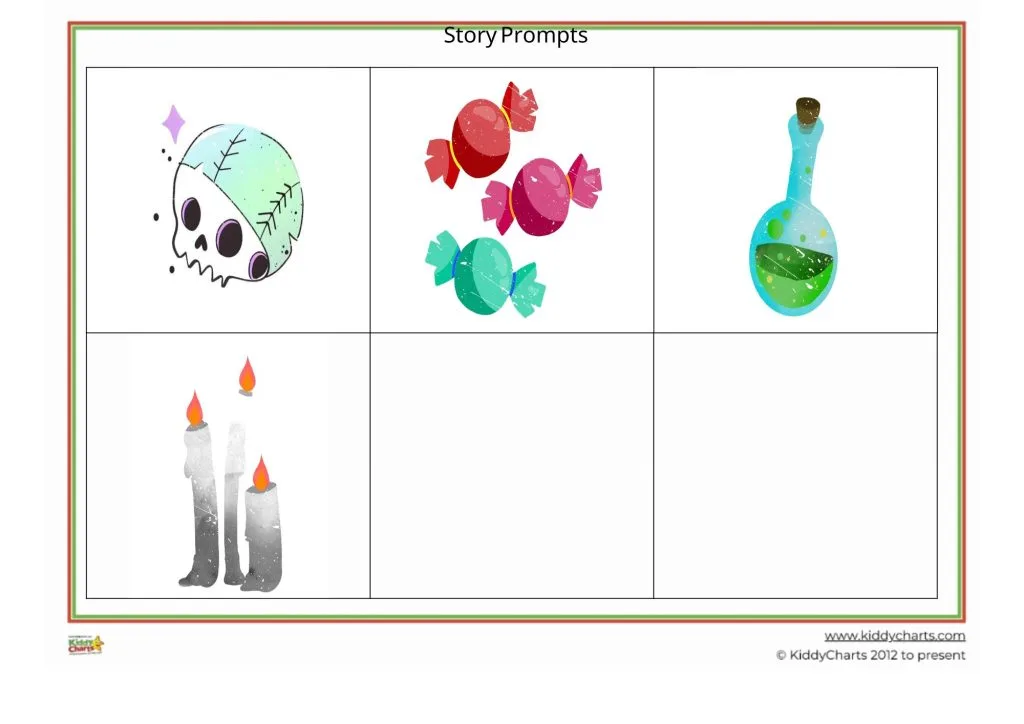
As you can see – there are a few different options for you. And with over 60 themes, and a random generator, along with our wonderful graphics on the site, we feel you can pick something that will work for you.
If you aren’t sure how the writing prompts will help with your creative writing, why not check out some of the ideas below?
How our tool supports creative writing and imagination
This personalised writing prompts tool offers numerous benefits including:
- Eliminating writer’s block: By providing specific starting points and visual cues, the tool removes the intimidation factor of the blank page and gets creative juices flowing immediately. This can be particularly support for neurodivergent children who don’t know where to start, and the set of wide ranging themes means that you can pick something that even related to their specific passions. This can be critical in engaging neurodivergent kids, and kids generally (!),
- Builds storytelling confidence: Regular practice with varied prompts can help your kids, and writers generally, to develop narrative skills and gain confidence in their ability to write engaging stories. Our prompts might also help lift your confidence generally, as you see your skills improve with each new story,
- Expands vocabulary naturally: As both kids and adults encounter the different themes and scenarios, they naturally incorporate new words and phrases into their vocabulary. For the prompts that are in very specific themes, such as unicorns and dragons, they might need to get creative to incoporate the characters into their stories. Prompts encourage you to describe scenes, emotions, or characters in detail, building descriptive skills. Give them a bit of license to decide what they want to include in their stories. These are tools, and you can use as much or as little as you want in the writing,
- Develops critical thinking skills: Writing prompts encourage writers to think through plot development, character motivation, and logical story progression. If you are working with prompts with a few different images, it can be wuite challenging working out how to get all the items into your tales! Sometimes, making a mistake or encountering an error in your story can lead to new and unexpected ideas.
- Enhances visual-verbal connections: The combination of images and text helps strengthen the connection between visual processing and verbal expression,
- Encourages risk-taking in writing: With fun, low-pressure prompts, writers feel more comfortable experimenting with different styles, genres, and creative approaches. Prompts can inspire you to imagine new scenarios or dream up unique stories. This can be particularly true is the writing prompt generator throws up some interesting random combinations, such as a whisk and a dragon. How are your kids gonna work that into their creative writing?
- Promotes sustained focus: Engaging prompts help writers maintain attention and focus for longer periods, helping to build concentration. If the prompts are a little different, that gets your kids, and you thinking all the more, and finally
- Sparks originality: Even with these guided writing prompts, writers need to make creative choices about their stories, incorporating new characters, maybe even some plot twists, and trying to get to a suitable resolution with the ideas that have been generated. Remember, every story starts with a draft, and taking notes as you go can help develop your ideas and keep track of creative sparks. Writing about sad moments or emotions can also deepen character development and make stories more relatable.


We hope that the creative tool sparks a bit of imagination for you. If you need a little more guidance, here are some thoughts on how to use it with different ages:
Using a computer makes it easy to access prompts and keep your writing organised. We hope our image prompts can serve as a ticket to new creative adventures, opening doors to stories you might never have imagined before.
How to use our writing prompt tool with different age groups
We think that one of the most exciting aspects of this tool is its versatility across age groups. For example, students can use it for school projects, creative assignments, or to practice storytelling skills. Here’’s how different generations might use it. We hope these provide you with some inspiration:
Ages 4-7 (Early writers)
You will likely want to keep things simple, and perhaps even add an overarching theme for some of the prompts. For example, printing out a random themed set of prompts, and giving creative writers an idea such as “a stranger come to visit” or “what I did last summer” to help narrow down the theme. As always though, this is up to you:
- Use single-page prompts with 2-3 colorful images to provide plenty of visual inspiration,
- Focus on simple themes like our random options, or animals, winter, or familiar everyday activities like the seasons,
- Encourage drawing pictures alongside our options to support early development. For example, they can pick their own prompts too to add to the sheet in the blank spaces available when using less than 6 images, and describe what they draw. Children can also practice filling in the blanks or spaces in their stories,
- Suggest that children make a note of their ideas or words they want to use as they write,
- Encourage children to write about what they might hear in the scenes they create, and to explore both sad and happy moments to express different emotions,
- Keep sessions short (10-15 minutes) to match attention spans, you can also come back to things too, and finally
- Celebrate creative storytelling over perfect spelling or grammar, as its important to bear in mind what your age group is capable of.
Ages 8-12 (Developing writers)
Kids are getting that little bit more creative, and have a wider vocabulary as their writing ability develops of course, so:
- Stick to 2-4 images for balanced guidance and creative freedom; sometimes having too many images can be over-whelming,
- Explore adventure, mystery, or fantasy themes that match growing interests,
- Use prompts to practice specific writing skills like dialogue or descriptive language, and encourage children to describe scenes or characters in detail, focusing on the protagonist,
- Suggest writing letters as a creative exercise to build communication and storytelling skills,
- Try prompts that involve creating a game or adding a surprise twist to the story for extra engagement,
- Encourage starting with a draft and revising stories to improve them,
- Encourage sharing stories with family members or classmates for feedback, and
- Potentially connect stories to broader learning goals in history, science, or literature.

Ages 13-18 (Teen writers)
Teens might be little bit more accomplished in their writing. The tool can be used in a number of different ways with them:
- Experiment with both 1-2 images for maximum creative control, or up to 6 images to give teens a challenge. It is harder to write a story that works with this wider range of images,
- You can combine the simple themes we have to tackle more complex ideas such as identity, friendship, or future dreams. Combine the prompts with your own ideas on this to create that little bit more complexity for your teen writers,
- Use these prompts as starting points for much longer creative writing projects,
- Encourage exploration of different genres and writing styles. For example, you could ask stories to be written in a gothic style, etc. or experiment with different formats such as letters, scripts, or diary entries. Suggest writing letters as a creative exercise or trying out unique storytelling formats,
- Suggest using prompts to dream up new ideas or imagine different worlds, characters, and scenarios. Encourage writing about both human and non-human characters to explore diverse perspectives,
- Motivate teens to include a surprise twist in their stories to keep readers engaged and excited,
- Connect creative writing to personal expression and self-discovery. Ask teens to use them to explore something very specific for their own self awareness.
Adults (Lifelong learners)
This tool isn’t just for kids, why not add a bit of fun to adult creative writing?
- Use 6 image prompts as warm-up exercises for serious writing projects, to get the creative brain in gear,
- Explore themes that connect to personal experiences or interests within the context of some of these themes. For example, spring signifying change, or Easter for rebirth, and so on,
- Dream up new stories or imagine different scenarios, focusing on the protagonist and their journey,
- Keep a note of ideas that come up during writing sessions for future inspiration,
- Try writing an article as a possible prompt outcome,
- Share story writing as a bonding activity with children or grandchildren, and
- Use these prompts within creative writing groups to share and discuss prompt-inspired stories.
We hope that you like some of these ideas for using the writing prompts. We do have other writing prompt resources on KiddyCharts that are relevant. Check these out below too:
Writing prompt ideas from KiddyCharts
Here are some more ideas from KiddyCharts that get the creative writing juices flowwing for the kids. Why not check them all out?
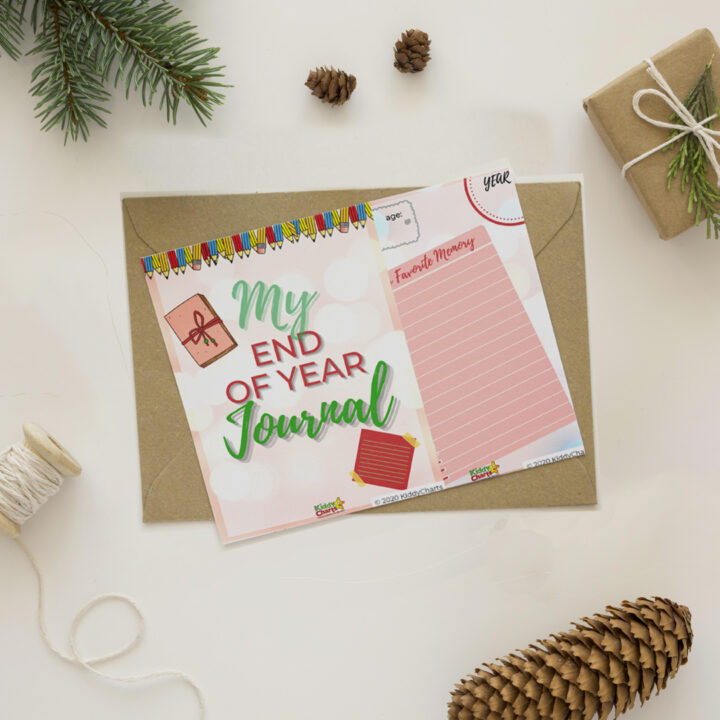
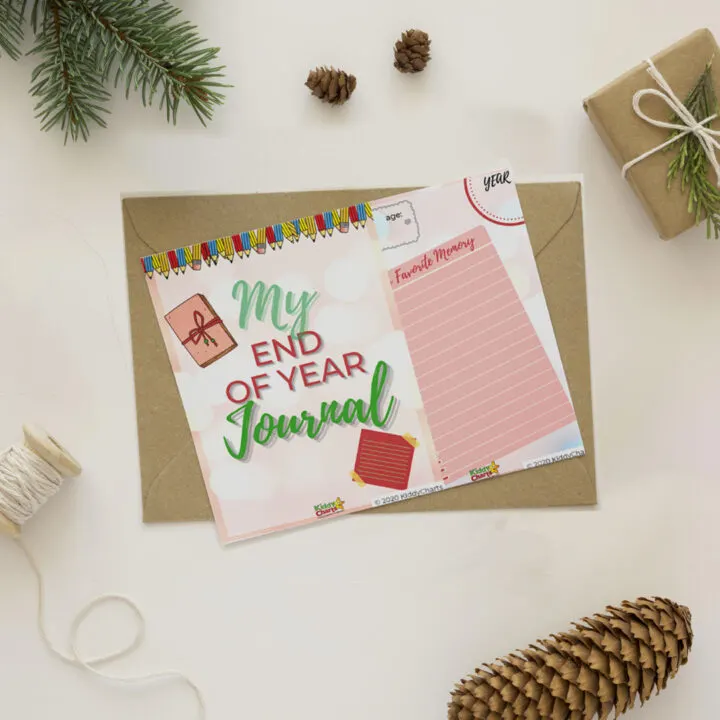
End of year journalling and writing prompts for kids
A fantastic end of year activity for the kids OR do it any time of year for a year previously. You decide!
Positive writing prompts for kids emotional development #31DaysOfLearning
Journalling is a great activity for kids to get in to to help them understand and process their feelings. Here is a wonderful resource for them all.


Spring worksheets: Writing prompts for kids (Exclusive with Time to Pee)
Finally, some spring writing prompts from our premium site, which is free to join!
We also have more literacy ideas too:
Literacy ideas on KiddyCharts
Here are some of the resources that we have on KiddyCharts to help improve kids literacy, including some writing prompts for them.
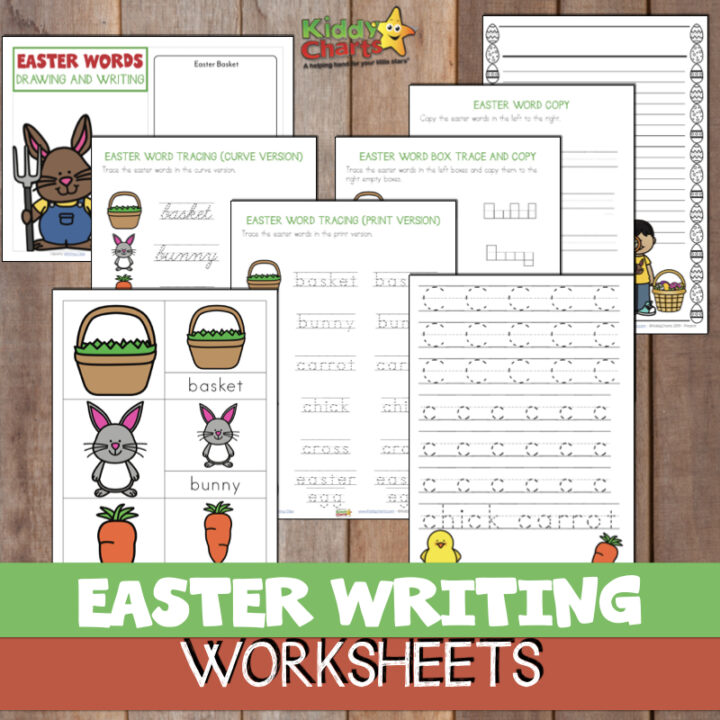
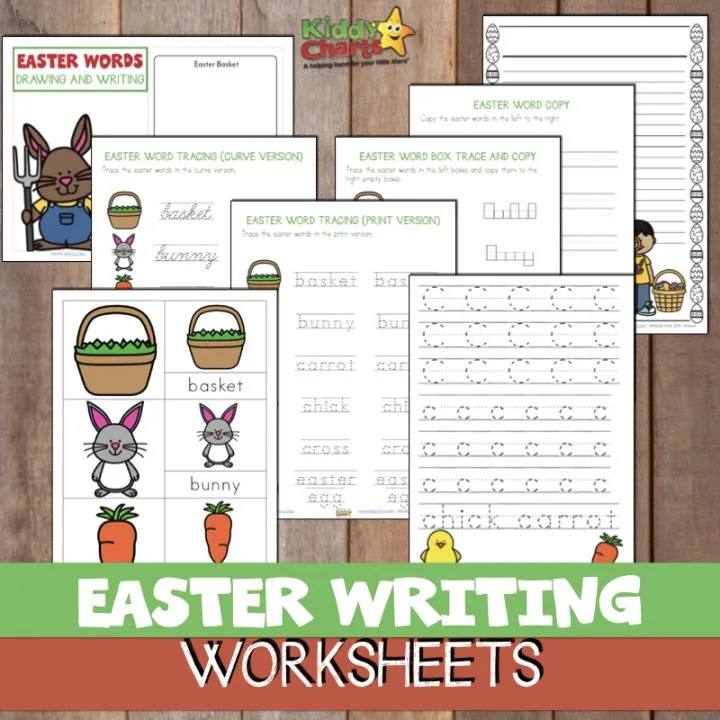
Easter writing worksheets and eBook
Worksheets with an Easter theme, including writing prompts and literacy ideas for your children.
Positive writing prompts for kids emotional development #31DaysOfLearning
Positive writing prompts to encourage good thoughts, as well as good literacy!
End of year journalling and writing prompts for kids
This is an excellent activity to help kids to look back on what has happened to them. You can adapt for other times of year, not just as an end of year activity.
Here are some writing prompt ideas offsite as well:
Writing prompt ideas from the internet
Some more ideas for writing prompts to help with literacy from the internet and fellow children's sites.
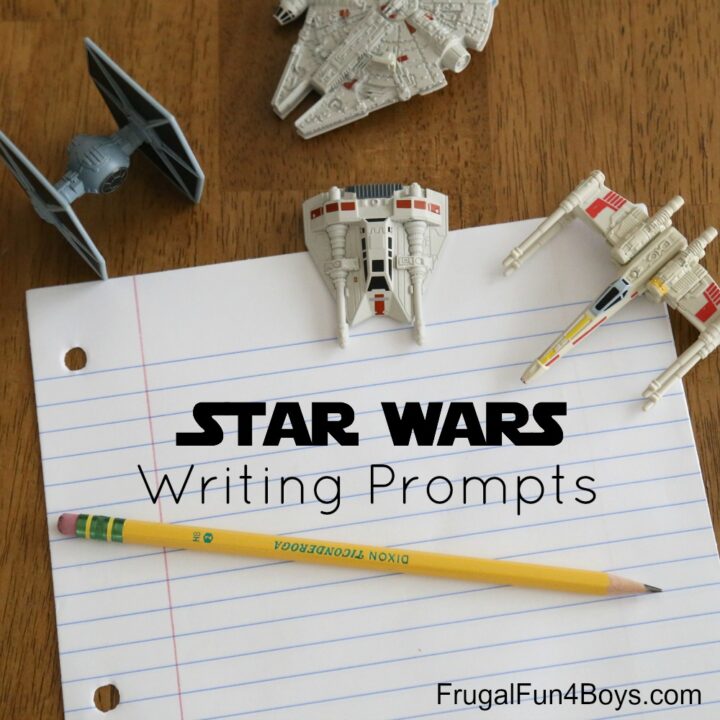
Printable Star Wars Writing Prompts
Frugal Fun for Boys is a fabulous site - and we couldn't resist these Star Wars writing prompts. Sure to get any fan interested!
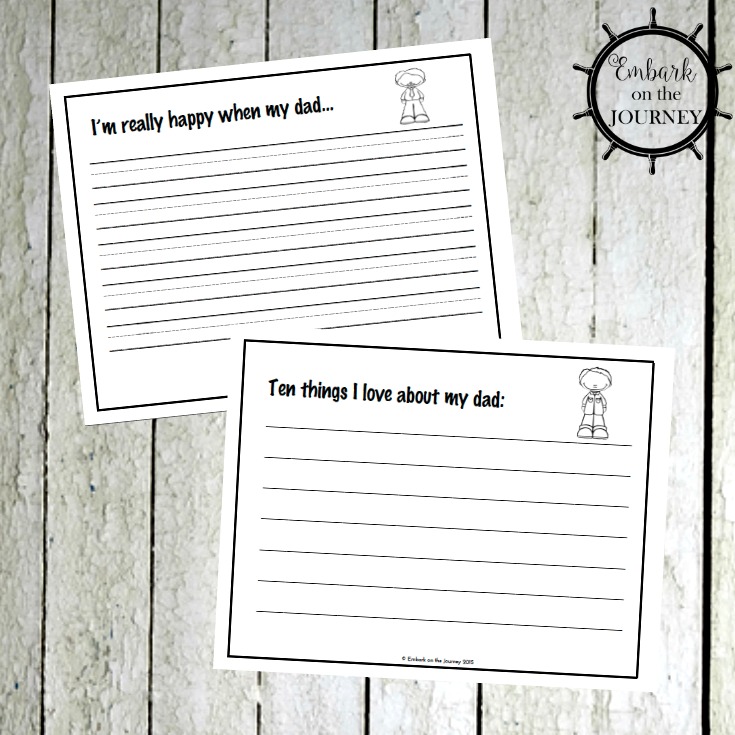

10 Printable Father's Day Writing Prompts for Kids
As we said above, writing prompts are typically focused on a specific topic; here are some Father's Day ones.
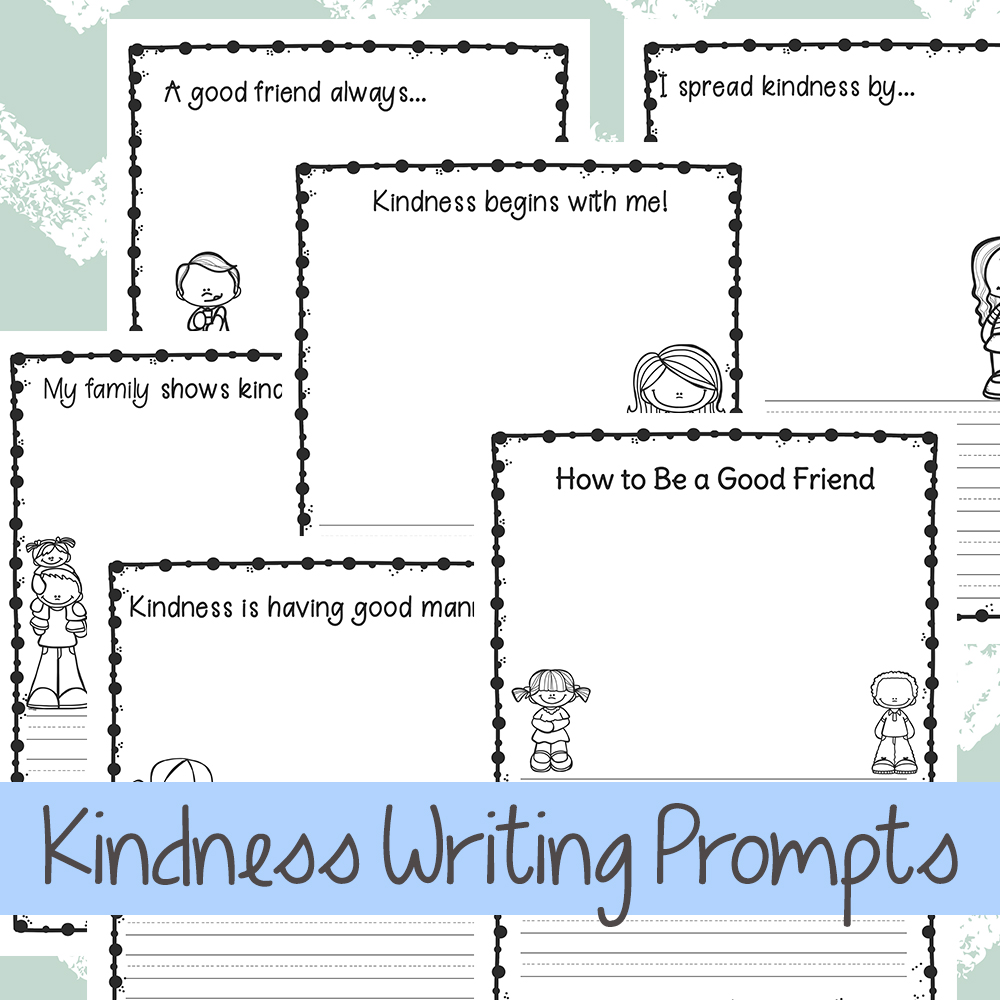
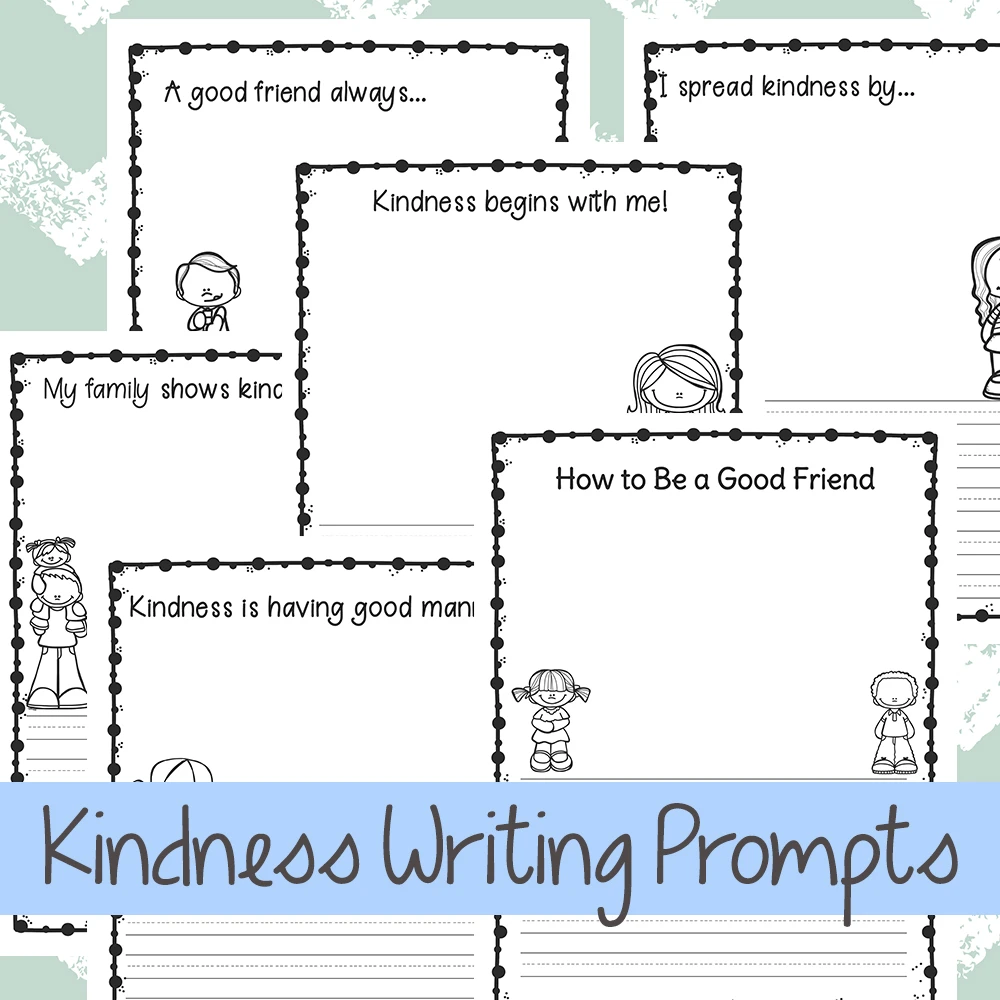
Kindness Writing Prompts for Kindergarten
Kindness is a key theme on KiddyCharts - so we thought that these writing prompts might appeal to you as well from Natural Beach Living.
We really hope you like this idea. Do sign up to our newsletter if you would like to as well:
See you on the site again soon,
Helen

Helen Neale

Helen is a mum to two, social media consultant, website editor and a qualified counsellor with experience of working with both children and adults. She is a registered member of the British Association of Counselling and Psychotherapists, with her own private practise. She also freelances with her local Mind organisation. Since giving up being a business analyst when juggling travel, work and kids proved too complicated, she founded KiddyCharts so she could be with her kids, use those grey cells at the same time, and supplement her counselling income. KiddyCharts has reach of over 680k across socials and the site. The site works with big family brands to help promote their services, as well as offering free resources to parents of kids under 10. She is a specialist counsellor for neurodivergent individuals and brings this expertise to her resources and the site. She is also an ADHDer herself. KiddyCharts gives 51%+ profits to charities, focused on supporting mental health and a community in Tanzania Helen has also worked as a digital marketing consultant (IDM qualified) with various organisations, including Channel Mum, Truprint, Talk to Mums, and Micro Scooters. She loves to be creative in the brand campaigns she works on. Get in touch TODAY!