
A bedwetting chart can be a gentle, effective tool for families navigating the challenges of nighttime wetting. Waking up to wet sheets is a challenge many families face. It is exhausting for parents changing bedding in the early hours, and it can be disheartening for children who desperately want to stay dry, but aren’t quite there yet. It is important to remember that developmental differences, such as neurodivergence, can mean that it is harder for some children to understand their body signals. Therefore, approaching toilet and potty training in a calm, and non-judgemental way is vital.

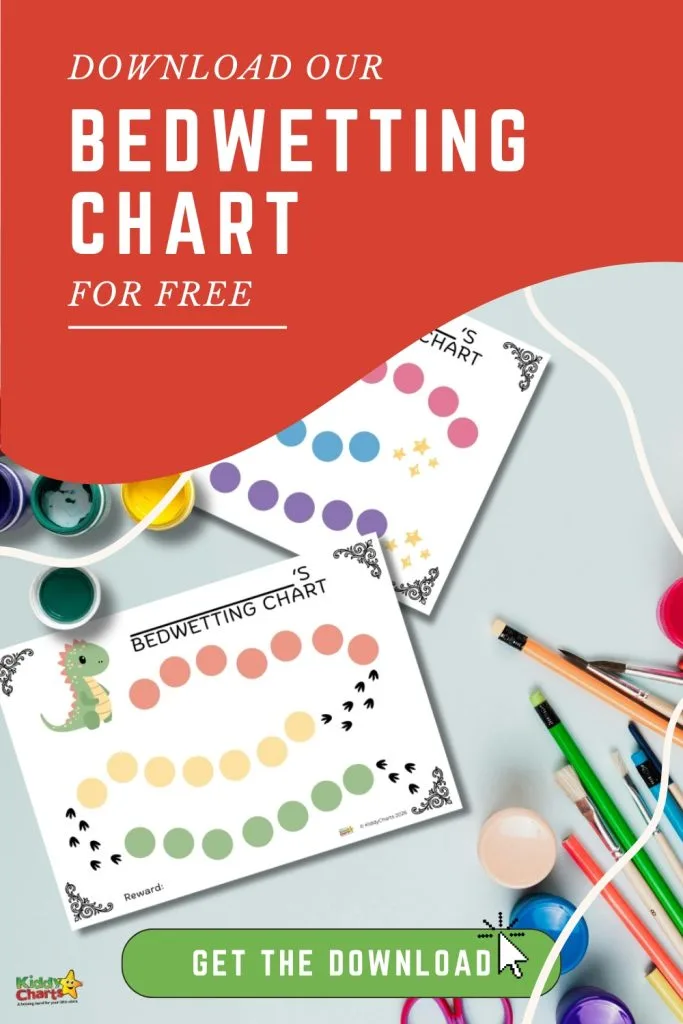
This chart resource is for parents and caregivers supporting children with bedwetting. Bedwetting can impact a child’s confidence and family routines, so gentle support is important. Navigating this stage requires patience, understanding, and the right tools. Using accurate, evidence-based information is essential for supporting children with bedwetting and helping families make informed decisions. It is critical not to punish or blame the child for wet nights, as bedwetting is not typically intentional and usually beyond their control. We are delighted to share our latest free printable resource designed to help you and your child on this journey: a gentle, positive bedwetting chart. If you have any specific concerns, ERIC, a UK charity that supports families in this area, is a further great resource.
This isn’t just about ticking boxes. It is about celebrating small wins and building confidence. The chart was created by us at KiddyCharts, and you can explore other designs or resources for additional support. We also want to explore why some children struggle more than others, looking at the fascinating role of interoception and how this affects neurodivergent children.
Introduction to bedwetting
Bedwetting, or nocturnal enuresis, is a challenge that many children and families face. It’s important for parents to remember that bedwetting is not a choice or a sign of laziness. Children do not wet the bed on purpose. It is best to avoid punishing or blaming your child for wet nights, as bedwetting is not typically intentional and beyond their control. Often, it happens because a child’s bladder is still developing, or they simply don’t wake up when their bladder is full during the night. This can be a frustrating problem, but it’s also a very common part of growing up.
Using a reward chart or star chart can be a gentle and effective way to encourage dry nights. By tracking each dry night and celebrating progress, children can feel proud of their achievements and motivated to keep working towards staying dry at night. For many children, seeing their progress on a chart and earning rewards helps them feel supported and understood as they work to overcome bedwetting. Parents play a key role in providing encouragement and making the journey to dry nights a positive experience.
As you learn more about bedwetting, it’s helpful to understand how visual tools like charts can make a difference. Let’s explore why using a bedwetting chart can be so effective.


Why use a bedwetting chart?
Visual aids are powerful tools for children. A bedwetting chart acts as a tangible record of progress, but more importantly, it serves as a platform for positive reinforcement. Tracking a child’s progress with star charts and other types of reward charts helps maintain motivation and encourages improvement over time. The most effective bedwetting charts are engaging and designed with the child, using consistent positive reinforcement.
However, the goal isn’t to shame a child for wet nights. Accidents happen, and they are a normal part of growing up. Never punish or blame the child for wet nights, as bedwetting is not typically intentional and beyond their control. The aim is to shift the focus from the stress of bedwetting to the celebration of dry mornings or even just the effort of following a bedtime routine. Using clear markers like stars or stickers to signify achievement helps children visualize their success, and immediate reinforcement is more effective than delayed rewards in motivating children to achieve dry nights.
Printable bedwetting charts are available on various health or parenting websites like the Wet-Stop website, as well as our own. Our charts can be personalised with different designs or themes such as dinosaurs, outer space, or favourite characters to make them more engaging for children.
If you are looking for a simpler version – scroll to the end of this article and we have a couple of download here too.
As you consider using a bedwetting chart, it’s helpful to know how to make the most of this tool for your child’s unique needs. Next, let’s explore how to use this printable effectively for the best results.


How to use this printable effectively
Reward systems should focus on observable behaviors, such as going to the toilet before bed or getting up to go to the toilet at night. Using this chart should be a collaborative and low-pressure experience. Here is how you can make the most of it:
1. Involve your child
- You can either Print the chart out together – one of our personalised ones, or scroll to the end of this article for the simpler ones.
- Let your child choose the pens or stickers they want to use.
- The chart is designed for kids and can be made more engaging with creative reward ideas, such as colorful stickers or fun drawings.
- Ownership of the process makes a huge difference.
2. Set achievable goals
- For some children, a dry night is the goal.
- For others, simply going to the toilet before sleep is the victory.
- Adjust the expectations to meet your child where they are at. It might take a little bit of work to see what is going to be appropriate for your child’s development.
3. Focus on positivity
- Use the “Reward” section at the bottom of the chart.
- Agree on a small treat for a full week of stickers.
- Possible reward ideas include:
- Stars on the chart,
- Pocket money,
- Time earned for preferred activities,
- A trip to the park,
- A movie night, and
- Extra story time. If you need ideas for rewards, check these out from my daughter.
- This doesn’t have to be expensive: simple, meaningful rewards work wonders.
4. Keep it private
- Ensure this chart is for your child’s eyes (and yours).
- It shouldn’t be displayed for visitors if your child feels embarrassed about it.
- It is their personal journey.
Bedwetting charts often utilize stickers or drawings to celebrate dry nights and positive behaviors.
The chart can also serve as a diagnostic diary for healthcare providers to identify patterns in wetting and rule out medical issues.
As you implement these steps, remember that every child’s journey is unique. Next, let’s look at the underlying reasons why some children may continue to struggle with bedwetting, even with positive reinforcement.

Understanding the “Why”: Interoception and bedwetting
Sometimes, despite charts and rewards, children continue to struggle. It is easy to think they aren’t trying, but often, there is a physiological reason behind it. This is where the concept of interoception comes in.
Interoception is often called our “eighth sense.” It is the sense that allows us to feel what is happening inside our bodies. It tells us when we are hungry, thirsty, hot, cold, or, crucially when we need to use the toilet.
For many children, the signal between a full bladder and the brain isn’t loud enough to wake them from sleep. Their interoceptive awareness might be lower, meaning they simply do not feel the urge to go until it is too late.
Achieving bed dry status is a developmental milestone and depends on true physical readiness, not just motivation or effort. When using a bedwetting chart, keeping interoception in mind changes your perspective. It helps you realise that a wet bed isn’t “naughtiness” or laziness; it is a missed body signal. You can support this by helping them tune into their body during the day. Ask questions like, “How does your tummy feel right now?” to encourage them to notice internal sensations. For more support on interoception, do check out Kelly Mahler as well.
For better results, parents should combine the use of a bedwetting chart with limiting evening fluids and encouraging regular daytime toilet use.
Understanding the role of interoception can be especially important for families with neurodivergent children. Let’s explore how neurodivergence can affect nighttime challenges and how to adapt your approach.

Neurodivergence and night-time challenges
This link to interoception is particularly relevant for neurodivergent children, such as autistic children or ADHDers. Research suggests that neurodivergent individuals often process interoceptive signals differently. They might not notice the sensation of a full bladder until it is urgent, or they might not register the sensation at all while they are deeply asleep or hyper-focused on something else. Sleeping patterns can significantly impact bedwetting, and the effectiveness of reward systems like star charts may vary depending on how a child’s sleep or waking habits affect their awareness of bodily signals.
If your child is neurodivergent, standard toilet training advice might not work as quickly. Here is how you can adapt the use of our bedwetting chart:
- Remove the pressure: If the chart causes anxiety, stop using it for a while. The goal is support, not stress.
- Celebrate routine, not just results: If dry nights are rare due to biological factors, use the chart to reward the routine. Did they limit drinks before bed? Did they use the toilet right before sleep? Think about those achievements instead.
- Visual structure: Autistic children often thrive with visual structure. The clear layout of our chart provides predictability and routine, which can be very comforting.
Star charts and reward systems can help children manage bedwetting by providing incentives for dry nights. Star charts can also be used to track progress and encourage children to stay focused on achieving dry nights.
Understanding that their brain processes signals differently helps parents move from frustration to empathy. It validates the child’s experience and removes the shame often associated with bedwetting.

By recognizing these unique challenges, you can better support your child’s journey. Next, let’s discuss how to set realistic goals for progress.
Setting realistic goals
When helping your child overcome bedwetting, setting realistic and achievable goals is essential. Every child is different, so it’s important to tailor goals to your child’s unique needs and abilities. For some, the goal might be to stay dry for a certain number of nights in a row; for others, it could be waking up to use the toilet during the night.
A progress chart or reward chart is a great way to track your child’s journey. For example, you might use a chart to mark each dry night with a star or sticker, and review the number of dry nights at the end of the week. Older children can be involved in setting their own goals and choosing rewards, which helps them feel more in control and invested in their progress. By focusing on specific, measurable achievements, like using the toilet before bed or staying dry for three nights in a row, parents and children can celebrate each step forward together.

With goals in place, it’s important to know how to handle setbacks and celebrate successes along the way. Let’s look at strategies for overcoming challenges and recognizing achievements.
Overcoming setbacks
Handling setbacks with patience
Setbacks are a normal part of overcoming bedwetting, and it’s important for both parents and children to approach them with patience and understanding. Even with the best efforts, wet beds can still happen from time to time. The key is to stay positive and keep the focus on progress, not perfection.
Learning from patterns
A reward chart or star chart can help children see how far they’ve come, even if there are a few bumps along the way. If your child experiences a setback, encourage them to keep trying and remind them of their successes. It can also be helpful to look for patterns, such as drinking too much fluid before bed or not responding to an alarm. You can then make small adjustments to the routine together. By addressing these issues and continuing to use the chart to highlight dry nights and positive behaviours, parents can help their child regain confidence and motivation to achieve their goals.

As you work through setbacks, remember that every step forward is progress. Now, let’s focus on how to celebrate your child’s successes to keep motivation high.
Celebrating successes
Recognizing every achievement
Every dry night is a victory worth celebrating. Recognizing your child’s achievements, no matter how small, can make a big difference in their confidence and motivation. When your child reaches a milestone, like a week of dry nights or remembering to use the toilet before bed, take the time to celebrate together.
Rewarding progress
You might use the stickers, stars, or small treats as rewards, or offer special privileges like choosing the family movie or picking what’s for dinner. For example, after a week of dry nights, your child could earn a fun outing or an extra bedtime story. Celebrating these moments helps your child feel proud of their progress and encourages them to keep working towards dry nights, making the journey to overcome bedwetting a positive and rewarding experience.
Celebrating successes helps reinforce positive behaviors and builds your child’s confidence. Maintaining a positive outlook is key as you continue this journey together.
Staying positive
Maintaining a positive attitude is one of the most important things parents can do to help their child overcome bedwetting. It’s easy to feel frustrated or discouraged by wet beds, but focusing on encouragement and support makes all the difference. Remember, bedwetting is a common problem and not something your child can control.
Using a reward chart or star chart helps keep the focus on positive achievements and progress, rather than setbacks. Offer praise and encouragement for every effort your child makes, whether it’s a dry night or simply following the bedtime routine. By using positive language and celebrating each step forward, parents can help their child feel secure, confident, and motivated to achieve dry nights. With patience, understanding, and a focus on progress, your family can work together to overcome bedwetting and build a sense of pride and accomplishment.
As you continue to support your child, having the right tools can make all the difference. Let’s look at how you can access and use your free printable bedwetting chart.
Download your free bedwetting chart
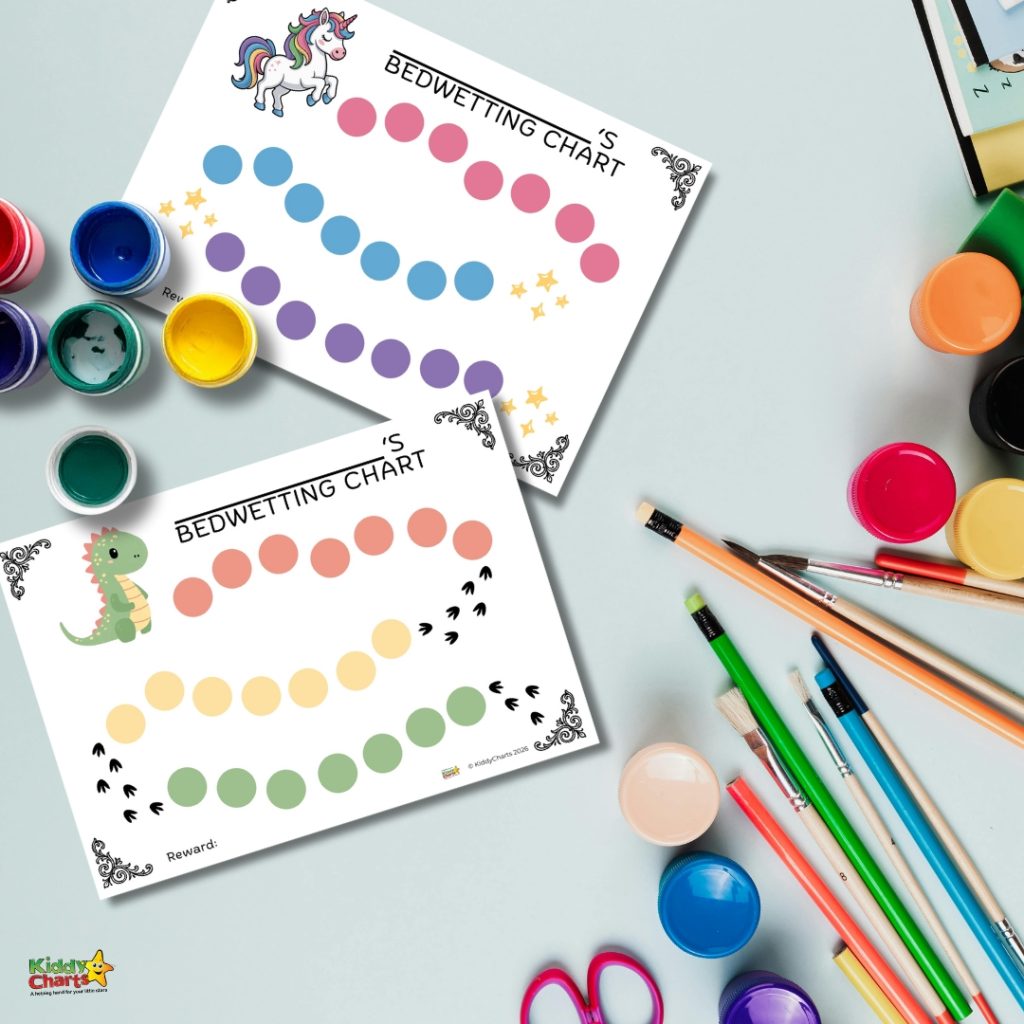
We have designed these printables to be simple, colourful, and easy to use. There are spaces to track progress across the week and a dedicated spot to write down the agreed-upon reward. A common benchmark for success in bedwetting treatment is achieving 14 consecutive dry nights, so be sure to track progress over time.
To download your free bedwetting chart, simply click on the image or the button below.
Remember, every child develops at their own pace. In the morning, celebrate dry nights with your child and respond with positive reinforcement to encourage continued progress. Whether it takes weeks or months to achieve consistent dry nights, your support creates a safe environment for them to learn. Avoid systems where rewards are returned or removed after a wet night, as this can undermine motivation. Encourage your child to work hard towards their goals, and a consistent effort is key to long-term success. By combining this visual tool with an understanding of interoception and body awareness, you are giving your child the best possible chance of success.
We hope this resource brings a little more dryness, and a lot more confidence, to your mornings. Hang in there; you are doing a great job.
If you are looking for other ideas for your child around rewards, do check these out on the site:
More reward chart ideas on KiddyCharts
Here are some more tips, ideas, and charts for you to check out on KiddyCharts. We hope you love them all.
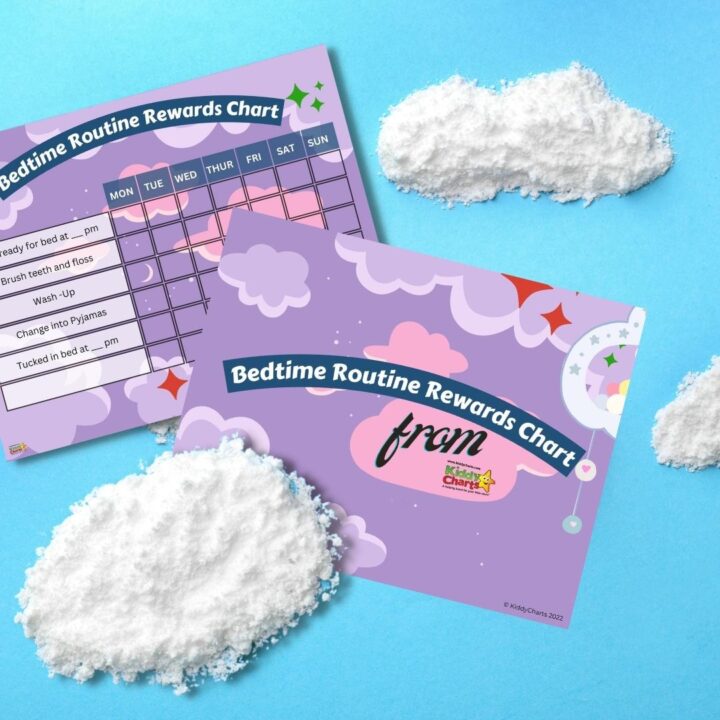
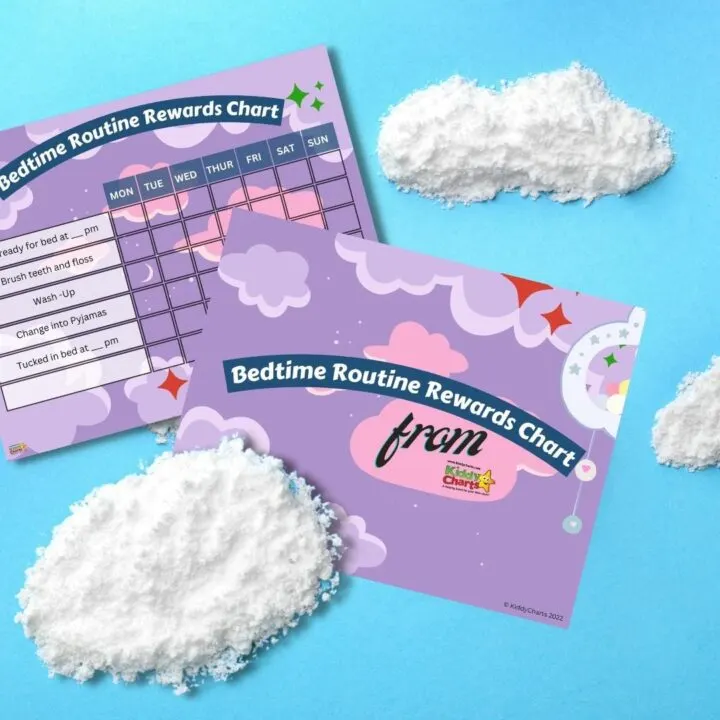
Bedtime routine chart to print now
This is a specific bedtime chart for you to take a look at - a great idea with a schedule depending on the age of your child too.


Free Printable Potty Training Chart for Toddlers
These are our amazing potty training charts, and yes, they are a race track, and amazing! we have other designs too, so check then out in this post.


Using charts to help with the age old problem of bedwetting
Using the reward chart to help with bedwetting - advice from a specialist.


Good rewards for kids: 17 top reward ideas FOR kids BY kids!
Here are some fabulous ideas for reward charts chosen by kids - so they must be good, right?
And here are more ideas on toilet training too:
Potty training resources
All this talk of poo or potties means that perhaps we need to chat potty training now too!


Tips for potty training special needs children and starting nursery: From a mum who knows
Some ideas for potty training special needs children.


When to start potty training: Give them time
When is it wise to start all this potty training anyway?



10 easy tips for night-time potty training to help ditch nappies for good
Some ideas for night night potty training, and making it easier too.
And some off site as well:
Potty training resources off site


Just a few pointers for people for when they start potty training, to help make things a little smoother.
Further help with working out if your child is read to potty train.


Making sure you have the rights thing in place within the house to help with potty training.
We hope you liked this article, and do come back to the site again.
Helen

Helen Neale

Helen is a mum to two, social media consultant, website editor and a qualified counsellor with experience of working with both children and adults. She is a registered member of the British Association of Counselling and Psychotherapists, with her own private practise. She also freelances with her local Mind organisation. Since giving up being a business analyst when juggling travel, work and kids proved too complicated, she founded KiddyCharts so she could be with her kids, use those grey cells at the same time, and supplement her counselling income. KiddyCharts has reach of over 680k across socials and the site. The site works with big family brands to help promote their services, as well as offering free resources to parents of kids under 10. She is a specialist counsellor for neurodivergent individuals and brings this expertise to her resources and the site. She is also an ADHDer herself. KiddyCharts gives 51%+ profits to charities, focused on supporting mental health and a community in Tanzania Helen has also worked as a digital marketing consultant (IDM qualified) with various organisations, including Channel Mum, Truprint, Talk to Mums, and Micro Scooters. She loves to be creative in the brand campaigns she works on. Get in touch TODAY!