
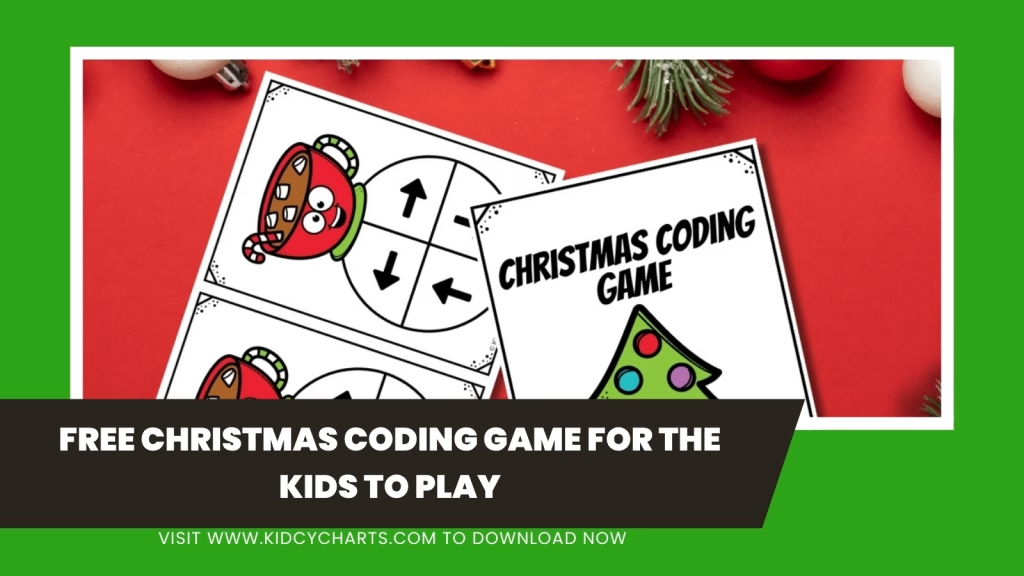
The festive season brings plenty of excitement, and finding engaging activities to channel that energy can sometimes feel tricky. If you want to keep little minds active while celebrating the holidays, we have just the thing. Our Christmas coding printable offers a wonderful screen-free way to introduce early programming concepts to children. It’s a simple idea that makes coding accessible for beginners and first-time coders.
This simple game teaches directional language, sequencing, and basic logic, all wrapped up in a festive theme. Children learn how to follow steps and record data, which are essential building blocks for maths and computing. Read on to find out exactly how to set up this Christmas coding activity, what materials you need, and how it helps children learn through play.
What is this Christmas greeting card animation coding activity?
At its heart, coding is simply about giving a computer a set of instructions to follow. Before children ever sit down at a keyboard to write complex scripts, they need to understand the basic concept of directions and algorithms. This printable game takes those abstract ideas and turns them into a physical, hands-on board game that helps teach algorithms to children.
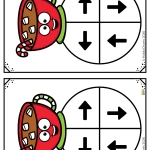
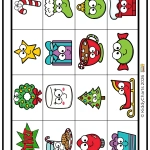
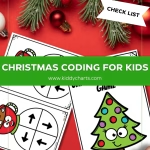
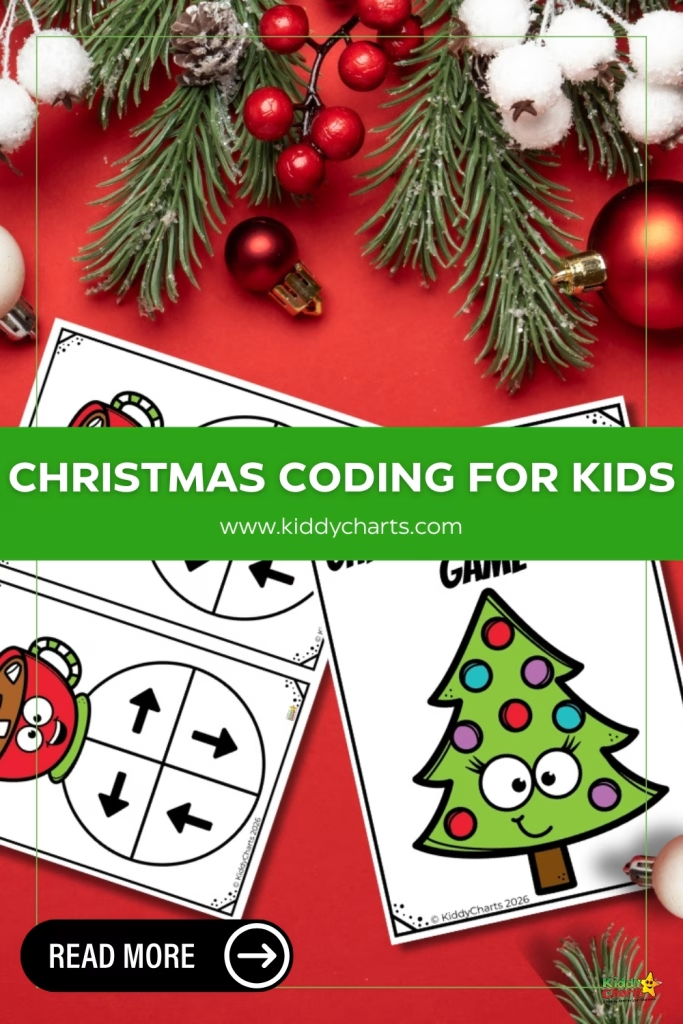
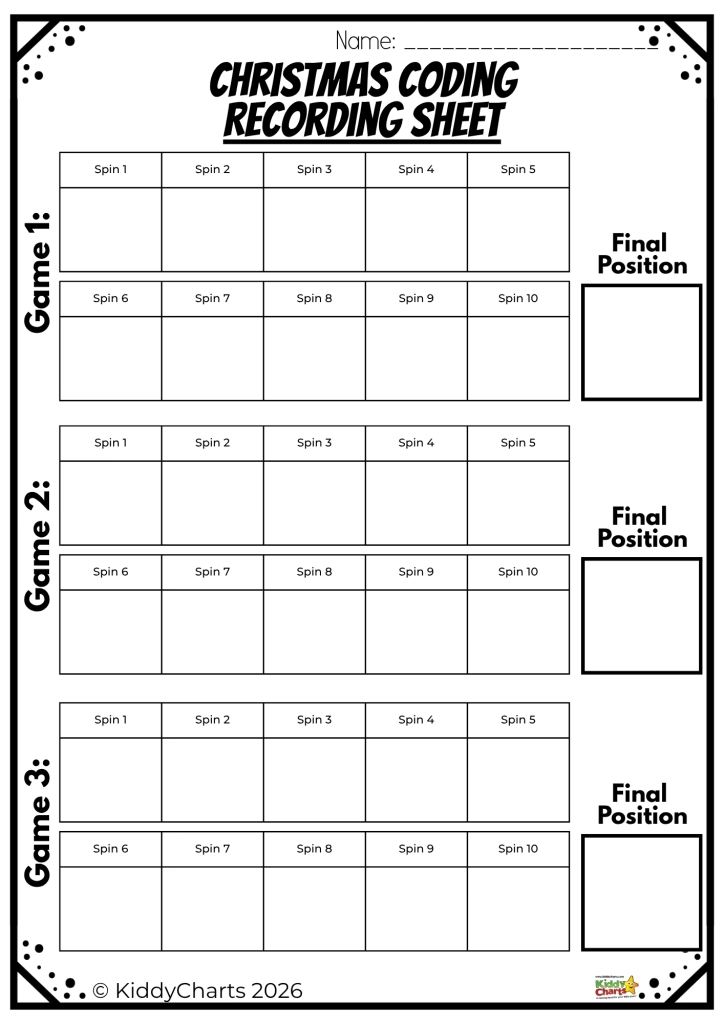
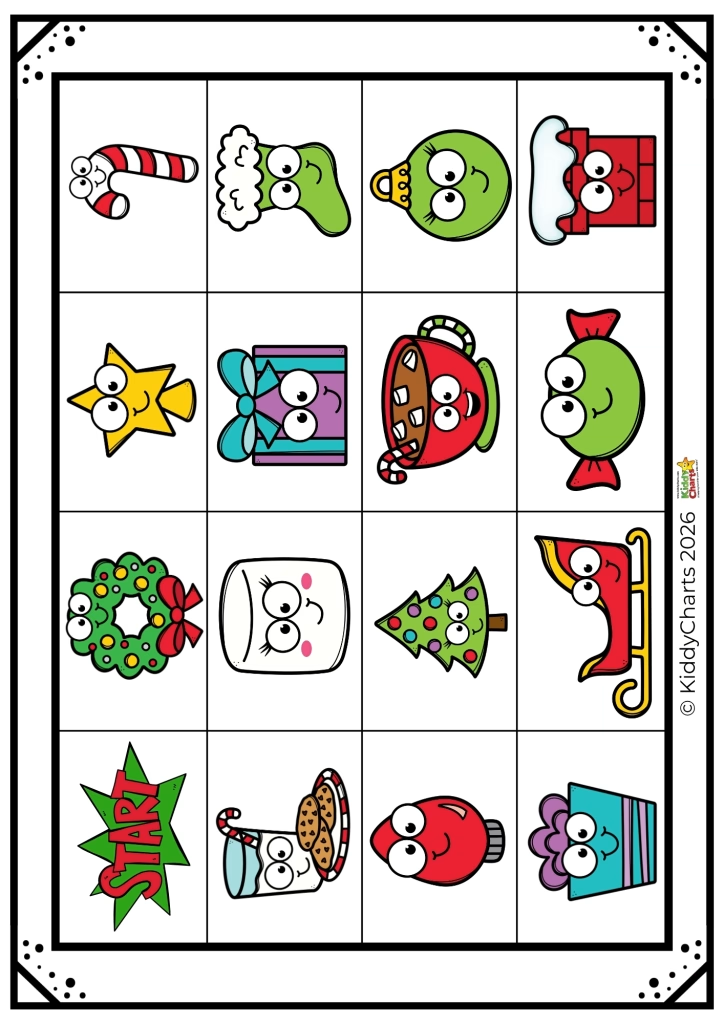
Players use a simple homemade spinner to determine a direction—up, down, left, or right. They then record this direction and move a game piece across a festive grid. By tracking their movements over ten spins, children create a basic algorithm, or a sequence of steps, just like a computer programme.
Using printable grids and directional arrows, children can guide characters through mazes, which teaches them the basics of coding without a computer.
Materials needed for your festive game
You do not need any expensive equipment to enjoy this activity. In fact, you probably already have everything you need lying around, especially if you already enjoy using free printable games and activity sheets at home or in the classroom. To get started, gather the following supplies:
- The Christmas coding printable game boards and recording sheets
- A pencil for each child playing
- A small paperclip for the spinner
- A pawn or small token for each player (you can use buttons, coins, or pieces from another board game)

Coding skills and concepts your child could practice
The magic of Christmas coding goes far beyond moving a pawn across a board. With a festive twist, children can explore a whole world of computer science concepts and programming skills: all while having fun and celebrating the holiday season. Here are some ideas for you alongside our coding:
Algorithm writing and testing
- Writing and testing algorithms: Whether your child is designing a christmas greeting card animation or planning out a festive sprite dance party, they’ll learn how to break down tasks into clear, step-by-step instructions. This hands-on approach to writing and testing algorithms helps kids understand how computers follow commands to create everything from a simple animation to a full Christmas storytelling animation.
- Problem-solving and logical thinking: Coding activities and other games like the jingle bell rhythm game or creating a christmas countdown timer challenge children to think logically and solve problems creatively. By figuring out how to match musical beats or set up a visual countdown, kids strengthen their ability to tackle challenges, which is an essential skill in both coding and everyday life.
- Understanding date and time logic: Projects such as a christmas countdown timer introduce children to the concept of date and time logic. They’ll learn how to create a visual countdown to Christmas, practicing how to work with dates, times, and even time zones.
Programming fundamentals
- Programming fundamentals: Interactive games like the santa delivery game, where Santa flies across the sky dropping gifts and avoiding snow monsters, introduce core programming concepts such as loops, conditionals, and functions. These playful projects make learning the basics of computer science both memorable and meaningful.
- Computational thinking and creative design: Building a virtual christmas tree, decorating it with ornaments, or experimenting with sierpinski fractal christmas trees encourages kids to break down complex problems into smaller, manageable parts. This computational thinking is the foundation for tackling more advanced coding challenges in the future.
- Daily programming challenges: Participating in small daily programming challenges, like an Advent of Code, helps children build persistence and resilience. Each day leading up to Christmas, they can solve a new puzzle or create a new festive project, progressing at their own level and pace.
Creative and advanced projects
- Interactive stories and games: Kids can unleash their creativity by designing interactive stories or mystery games, where christmas objects hide in random spots and players must use clues to find them. These projects teach event handling, user input, and the importance of planning an entire sequence of actions.
- Exploring binary code: Activities like making Binary Code Christmas Tree Ornaments introduce children to the language computers use to communicate. By turning binary code into a festive craft, kids learn about data representation in a hands-on, memorable way.
- Festive cheer through music and rhythm: Coding projects that incorporate holiday music and christmas songs, such as creating their own holiday song or playing the jingle bell rhythm game, teach children about timing, rhythm, and even sound effects. Matching musical beats and coding a holiday song make programming feel like a festive celebration.
Festive coding activities
- Advanced projects for middle schoolers: As children grow, so can the complexity of their projects. Middle schoolers might enjoy creating more complex pathways in a reindeer race, using the random library to generate unpredictable outcomes, or designing a snowball fight game with challenging obstacles and exciting race mechanics.
- Winter wonderland scenes and snowflakes: Using programming languages like Python and Turtle graphics, kids can create beautiful winter scenes where snowflakes fall gently from the sky. These projects reinforce concepts like loops, randomness, and animation basics, all while building a magical winter wonderland.
- Interactive activities and user interface design: Children can experiment with set drag mode to decorate a virtual tree, switch costumes for their characters, or broadcast events to trigger festive animations. These interactive activities introduce user interface design and event-driven programming in a playful, accessible way.
Simple ideas and support
- Simple ideas for younger learners: Even the youngest coders can join in the fun by pressing arrow keys to move a character, making snowflakes fall, or finding a hidden christmas cookie or candy canes. These simple projects introduce basic coding concepts like directional arrows, conditional logic, and interactive storytelling.
- Testing algorithms and adult supervision: As children test their algorithms, whether guiding Santa to deliver all the presents or helping the Grinch steal Christmas, adult supervision can provide valuable support and encouragement, especially for more complex projects or when introducing new programming fundamentals.
- Fun elements and festive themes: By weaving in fun elements like snow monsters, costume switching, and exciting races, Christmas coding projects keep kids engaged and motivated. The festive cheer of holiday-themed activities makes learning computer science a joyful part of the holiday season.
With so many creative Christmas projects to explore, children can develop their coding skills, computational thinking, and problem-solving abilities, all while enjoying the magic of the holidays. Whether they’re designing a winter scene, coding a christmas countdown timer, or inventing their own interactive stories, these activities offer endless opportunities for learning and festive fun.

How to play the Christmas coding game
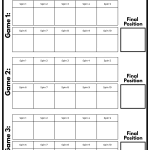
Setting up the game is wonderfully straightforward. Each child receives their own game board, a recording sheet to track their spins, a pawn, and the tools to make their spinner. This christmas coding game is designed as an interactive activity, encouraging hands-on participation as students engage with the materials and game mechanics.
Making your DIY spinner
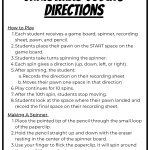
You do not need a plastic spinner for this game. Children can easily make their own using just a pencil and a paperclip. This brings a lovely craft element to the activity and adds a bit of hands-on construction before the game even begins.
- Place the pointed tip of the pencil through the small loop of the paperclip.
- Hold the pencil straight up and down, making sure the tip rests exactly in the centre of the spinner board.
- Use a finger to gently flick the paperclip. It will spin around the pencil just like a real game spinner.
- Wait for the paperclip to stop completely. The direction it points to is the instruction the child must follow.
Following the instructions
Once everyone understands how to use the spinner, the real Christmas coding begins.
- Have everyone place their pawn on the space marked “START” on their game board.
- Players take turns flicking their paperclip spinner. The spinner will land on a specific direction: up, down, left, or right.
- Before moving their piece, the child must record the direction on their recording sheet. This step is vital because it mimics how programmers write lines of code.
- After writing down the direction, the player moves their pawn exactly one space in that direction on the board.
- Play continues like this for exactly ten spins.
- After the tenth spin, players stop moving their pieces. They look at the final space their pawn landed on and record this final position on their sheet.
For a fun variation, try adding object hides: before the game starts, hide small objects like cookies or gifts on the board. As players move their pawns, they can search for these hidden items and collect them when they land on the same space, adding an interactive winter-themed twist to your Christmas coding game.
Downloading the printable
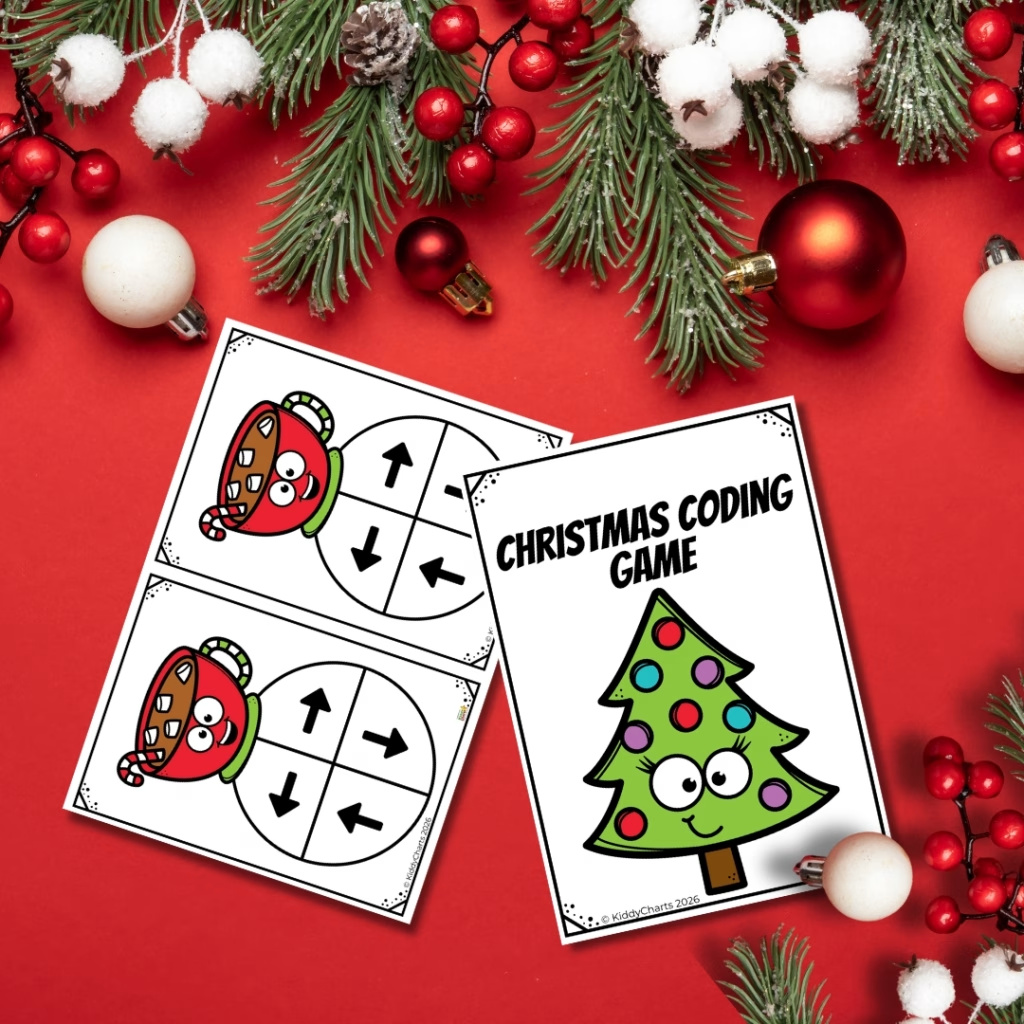
In order to get this, just clink on the image below, or the button, and we will take you to the free PDF:
The learning, craft, and writing and testing algorithms benefits
The above activity brilliantly bridges the gap between crafting, playing, and learning. From a physical perspective, creating and using the paperclip spinner requires fine motor skills. Children must use a pincer grip to hold the pencil steady while flicking the paperclip with their other hand. This coordination takes practice and helps strengthen the hand muscles needed for neat handwriting.
From a learning perspective, the benefits are vast. Children practise spatial awareness and directional vocabulary. Words like ‘left’ and ‘right’ can sometimes confuse younger learners, and moving a physical object across a grid cements this knowledge. Furthermore, the act of writing down each step before taking action teaches patience and sequence tracking. They learn that a specific set of inputs (the spins) leads to a specific output (the final space on the board). This is the absolute core of computational thinking, and the activity also helps develop computational skills by encouraging children to solve problems, recognize patterns, and build resiliency through trial and error.
Engaging in coding activities helps children develop critical 21st-century skills such as logical reasoning, creativity, and perseverance. Coding is fundamentally about problem-solving, where children learn to create algorithms that instruct computers on how to perform tasks. This Christmas coding game is a great example of holiday-themed STEM activities that make learning fun and practical for families and classrooms, and it pairs brilliantly with other winter party and activity ideas for kids when you’re planning celebrations.
Students learning variables can benefit from tracking their moves and outcomes, similar to how variables are used in programming to store and update information. For even more festive learning, try Advent calendar STEM challenges that provide daily coding activities leading up to Christmas, explore websites packed with free printable activities, or create pixel art on graph paper as a screen-free way to explore coding concepts.
Adapting the game for your setting
This Christmas coding game fits beautifully into a variety of environments. Whether you want a quiet afternoon activity at the kitchen table or an engaging group task for a busy room of eager learners, it scales perfectly. The game can also be adapted for middle school students by increasing the complexity of the coding challenges or adding new obstacles and logic puzzles to keep older learners engaged.
Because each child uses their own board and recording sheet, they can work entirely independently at their own pace. If you have a larger group, you can easily turn it into a social activity by having children work in pairs. One child can be the “programmer” who spins the spinner and records the directions, while the other acts as the “computer”, moving the pawn across the board based on their partner’s instructions. They can then swap roles for the next game.
For a creative twist, try a variation where kids design their own winter scenes or game boards. This ‘kids design’ activity lets children craft unique layouts, hide objects, and add interactive elements, making the game even more engaging and personalized.
You can also encourage discussions about probability. Because the spinner has four equal sections, children can predict where they might end up. If a child lands off the board, it provides a great opportunity to talk about “bugs” in the code and how we can reset and start again. You might even laminate the game boards and recording sheets so children can use dry-wipe markers, making the activity completely reusable throughout the entire festive season, or use a free printable bingo cards generator to create customised festive bingo games as an additional activity.
As an extension for older or more advanced students, consider digital Christmas coding adventures, such as creating a snowflake landscape using Python’s Turtle module, to visually engage learners in coding.

Try it out today to build coding skills
Early coding does not require a screen or an expensive app. With a simple grid, a paperclip, and a dash of festive cheer, you can help children develop essential problem-solving skills.
After trying this activity, consider exploring more Christmas coding games and projects, which we have linked to above. Kids can dive into scratch projects, such as designing a mystery game where players search for hidden objects, a santa find maze to help Santa retrieve his lost hat, a reindeer fly engineering challenge, a throw snowballs game where players hit targets, or a create snowflakes tutorial to simulate a winter wonderland. Another fun idea is to code a rhythm game where players must press the correct keys to match musical beats.
Scratch is a powerful platform for creating interactive stories, games, and animations, making it ideal for holiday-themed projects. Kids can create a Christmas greeting card animation in Scratch, complete with falling snowflakes, or build a Santa delivery game where players catch gifts falling from the sky. Python is also a versatile programming language for creating visually engaging projects like snowflakes and fireworks, perfect for children ready for more complex coding. Block-based coding platforms like Scratch are ideal for introducing coding logic to children, allowing them to create programs by dragging and dropping colorful code blocks. Alongside hands-on projects, you can explore free ebooks and digital activity books for kids to extend their learning. For accessible, guided holiday coding tutorials, try the ‘Hour of Code‘ initiative.
Print out the Christmas coding sheets above, grab a handful of pencils, and enjoy watching your little ones discover the fun of algorithms and directions.
For more STEM activities, check out what we have on site and below:
Science related activities and printables
Here are some more science activities to get stuck in to today.
Frog life cycle printables: Get to know your tadpoles!
So what is the frog and tadpole life cycle all about - we've got activity sheets to help learn about it all.
Ladybug Life cycle: Free printables for writing, math and fun!
The ladybird lifecycle is just as interesting as the flog - why not take a look here?
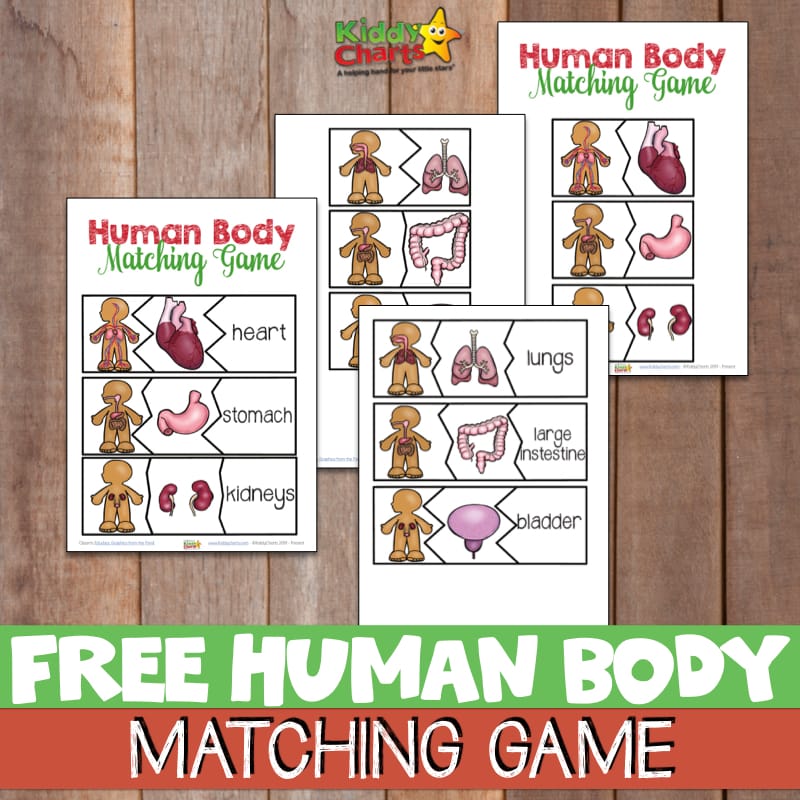
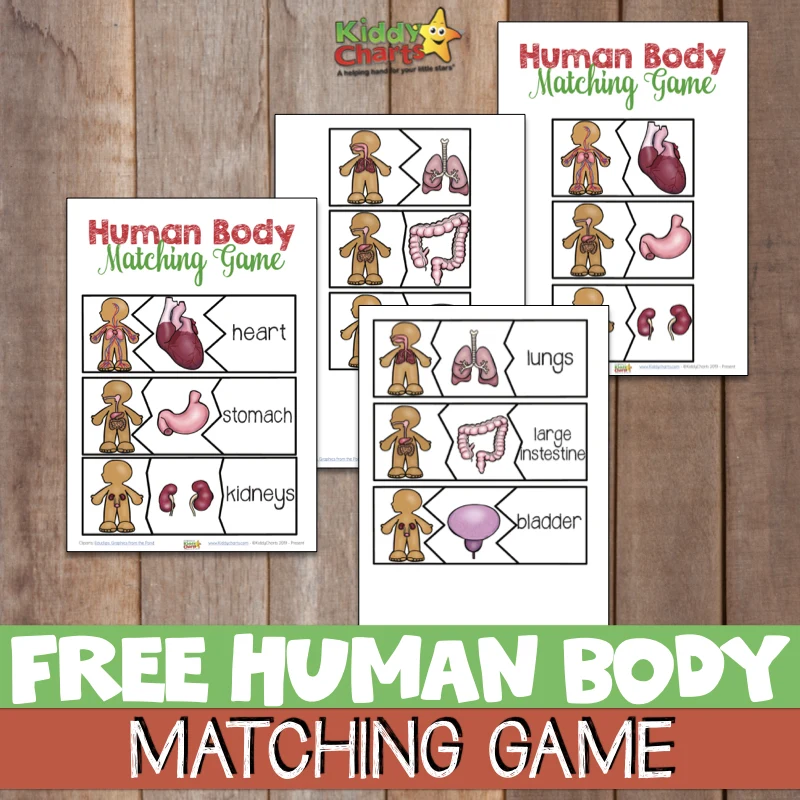
Human body matching game - Free printable
We have a human body matching game to help kids to learn all about their bodies.
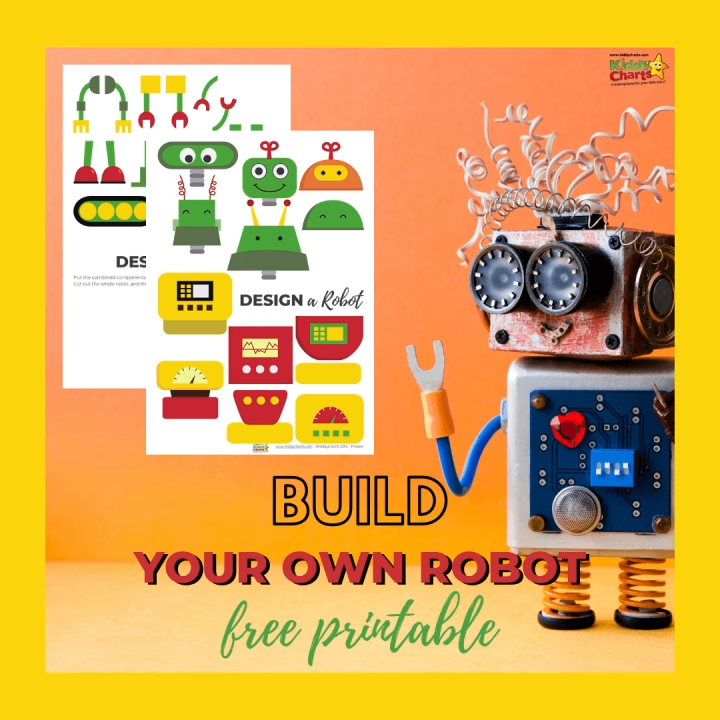
Build your own robot free STEM printable
Fancy building a robot? We have a printable to help!
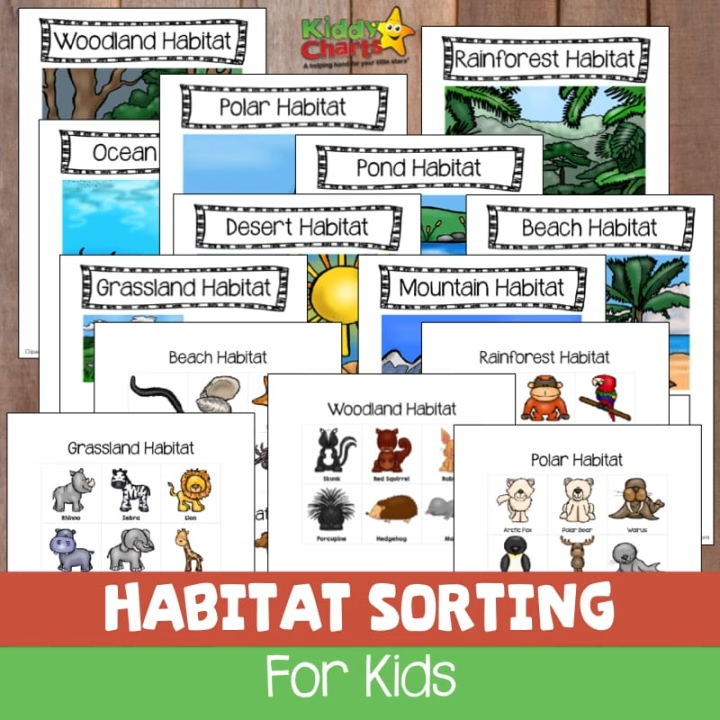
Animal habitats sorting game for kids: Free printable
This is our most popular printable activity - take a look and have some fun with us today.
Maybe some of these too wider than our site:
More STEM ideas from the web
Combine learning and fun with these STEM ideas from around the web.

28 Days of STEM Activities and STEAM Activities for Kids
This post has 28 days of STEM activities for your kids to try out and enjoy.
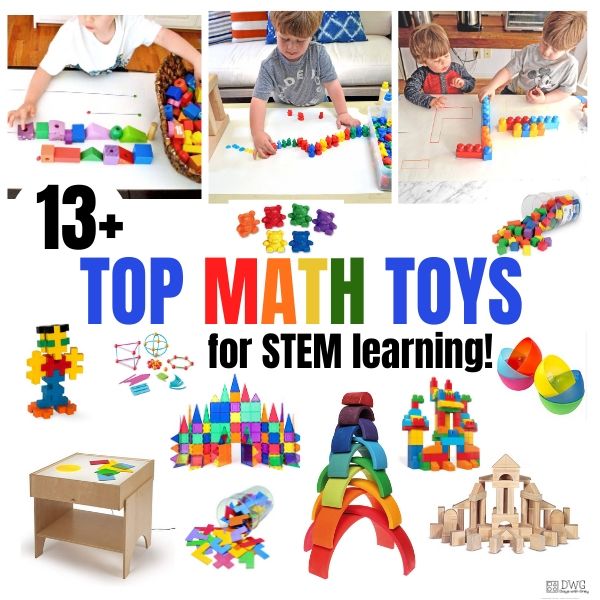
13+ Math Toys to Inspire STEM
Who said toys can't be educational? Check out these top math toys for STEM.
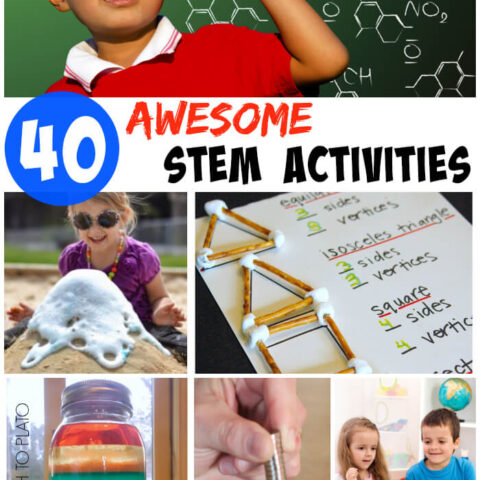
40 STEM Activities for Kids
Can't get enough STEM ideas? Here are 40 more!
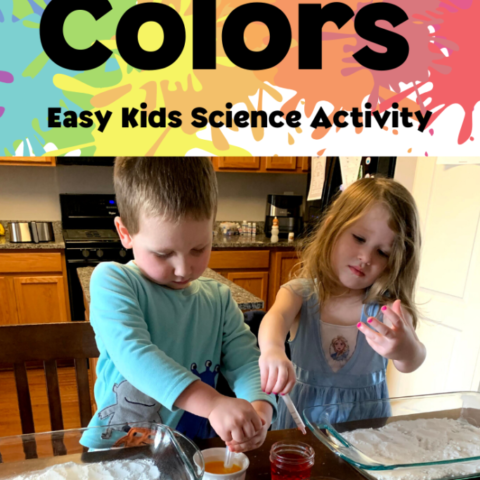
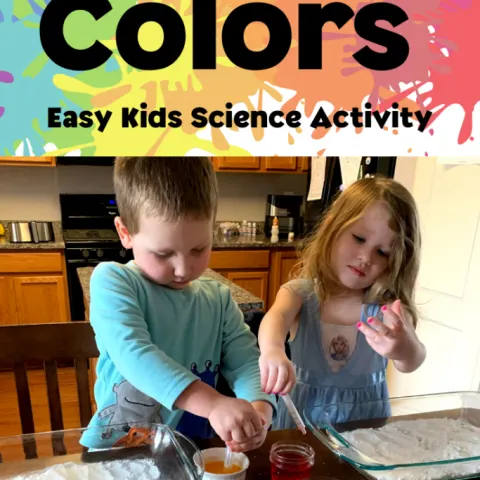
Fizzing Colors Science Activity
This looks like so much fun - ideal for little hands to explore with. So colourful, and fabulous for them!
We’d love to see you again, so do come back. Take care,
Helen
Helen Neale

Helen is a mum to two, social media consultant, website editor and a qualified counsellor with experience of working with both children and adults. She is a registered member of the British Association of Counselling and Psychotherapists, with her own private practise. She also freelances with her local Mind organisation. Since giving up being a business analyst when juggling travel, work and kids proved too complicated, she founded KiddyCharts so she could be with her kids, use those grey cells at the same time, and supplement her counselling income. KiddyCharts has reach of over 680k across socials and the site. The site works with big family brands to help promote their services, as well as offering free resources to parents of kids under 10. She is a specialist counsellor for neurodivergent individuals and brings this expertise to her resources and the site. She is also an ADHDer herself. KiddyCharts gives 51%+ profits to charities, focused on supporting mental health and a community in Tanzania Helen has also worked as a digital marketing consultant (IDM qualified) with various organisations, including Channel Mum, Truprint, Talk to Mums, and Micro Scooters. She loves to be creative in the brand campaigns she works on. Get in touch TODAY!