



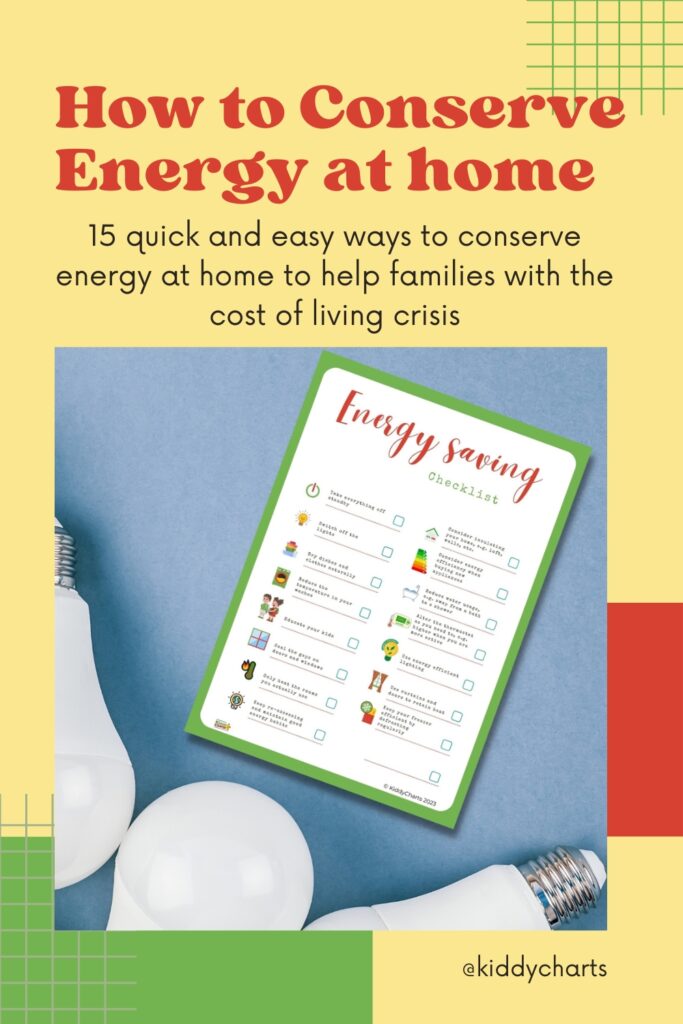
Cost of living tips are everywhere it seems, so we are jumping on the bandwagon (!). We have created our very own how to conserve energy at home checklist. This checklist is designed to help you with reducing energy consumption through practical steps and ideas. This is just a set of tips and ideas for you all to consider, and check off once you have decided to implement them, or you have actually done them. We’ve got 15 ideas for you, and a blank space so that you can come up with your own. Alternatively, do your own research online, or with your local energy provider, and pop it on our sheet. Why not check out our other money savings ideas on site too?

We are all struggling with bill, and rising costs. It can be tempting to get too creative with things and potentially even consider energy theft, with a 400% increase in reported cases since 2017 in the UK. However, there are too many dangers associated with this. For example, trying to game the system can cause fires and explosions leading to injury and even death. Believe it or not, there are 250,000 cases of energy theft that go unreported every year, and £50 is added to everyone’s electric bill in the same period because of it.
It is better to check out our legal and creative ways for saving energy. These actions can improve energy efficiency and help you save money. Let’s look to change the way we think and act in the home to help cut those costs.
What is Energy Conservation?
Energy conservation is all about using less energy in your daily life to help lower your utility bills and reduce your impact on the environment. By making small changes at home, you can cut down on your energy consumption, which means using less electricity, natural gas, or other energy sources. This not only saves you money but also helps preserve our planet’s limited resources.
Simple ways to conserve energy include switching to energy efficient appliances, sealing air leaks around doors and windows, and choosing energy efficient products whenever possible. Even small steps, like turning off lights when you leave a room or unplugging devices when they’re not in use, can add up to big savings over time. You can also look into renewable energy options, such as solar panels, to further reduce your reliance on fossil fuels. Remember, every bit of energy you save means less electricity is needed, which is good for your wallet and the world.
Our 15 cost of living tips around energy
We’ve taken a look at what is best to do around the family home to reduce costs, and these are our main thoughts and tips. These tips are designed to boost your home’s energy efficiency, helping you save on utility bills and reduce your environmental impact. If you think you have more, why not pop them in the comments or contact us?
1. Take everything off standby
Take everything off standby: this is simple, but it CAN be hard to achieve in a family home as there are so many appliances. Using power strips can make it easier to turn off multiple devices at once. A power strip allows you to cut power to several electronics simultaneously, preventing standby power drain. Smart power strips can automatically shut off power to devices when they are not in use, helping to eliminate phantom loads. Advanced power strips offer features like remote control and scheduling, further reducing energy waste. It helps if you put it into your routine to turn things off just before you go to bed,
2. Switch off the lights
Good luck with this if you have a house of teenagers… 😂 Getting into the habit of turning off lights as you leave the room is a brilliant way of learning how to conserve energy at home. Incandescent bulbs use more energy than modern lighting options like LEDs and CFLs, making them less efficient. Traditional incandescent bulbs are less efficient and have a shorter lifespan compared to energy efficient bulbs. Replacing traditional incandescent light bulbs with energy efficient bulbs such as LEDs and CFLs offers significant benefits, including lower electricity consumption, longer lifespans, and cost savings over time. Consider using energy efficient alternatives to traditional lighting to promote efficient energy use in your home. Switching to efficient energy lighting can reduce electricity consumption and lower your energy costs. Instil it early in the kids, and you’re on to a winner!
3. Dry dishes and clothes naturally
This is easier if you live in a country within a lovely climate. Those within the UK, and other temperate climates, might struggle with this in the winter. Do the best you can with the weather than you have 😊

4. Reduce the temperature in your washes
Linked to reducing the use of your dryer, why not thinking about altering the temperature if your washes, if it feels safe and hygienic to do so. Washing clothes in cold water can significantly reduce energy use and help preserve clothing quality. Clearly, if you have to take into account nits or worms, do what you need to in the family home. If not though, drop the wash from 40 degrees to 30 degrees, you will be amazing at how much you can save.
5. Educate your kids
We have already talked a little bit about this – but it is so important, to help kids to understand why saving money, and therefore saving energy is important. It isn’t just about saving the pennies, it is also about saving the planet. Why not get some books which really hit the spot on this. There are a few relevant titles that we love, including:
- Lonely Planet Kids: 101 ways to be an Eco hero, for tweens primarily, and perhaps younger teens,
- Mother Earth is Weeping, which is good for younger children, and
- The Art of Being a Brilliant Teenager, which looks at the ways teens can think about how they can contribute, including around the environment.
6. Seal the gaps on doors and windows
You would be amazed at how much hot air can escape and cold air can enter your house through gaps around doors and windows. These gaps often occur where the wall and window frame meet. Consider getting draft excluders at a bare minimum. Sealing these gaps helps maintain the efficient flow of hot and cold air throughout your home. Use simple air sealing techniques, such as caulking and weather stripping, to seal air leaks around doors, windows, and vents. Sealing air leaks is crucial to improve comfort and energy efficiency. These actions help reduce unnecessary heat loss, especially in winter. Consider getting draft excluders at a bare minimum. Windows are also worth checking, not just your doors.

7. Only heat the rooms you use
This seems obvious, but you would be amazed at how sometimes you end up heating the whole house because you don’t think to turn off radiators in rooms you don’t use. Check their levels as well, do they really need to be on full?
8. Consider insulating your home
Sometimes you need to spend a little to improve things, so it is worth considering what you can do about insulating your house. In particular, you might look at cavity wall insulation, or loft insulation to help bring down energy bills. Insulation helps prevent cool air from escaping in summer and warm air in winter, improving indoor temperature control. Proper insulation can also reduce heat gain during hot weather, which lowers cooling costs. Without adequate insulation, poor sealing can lead to resulting energy waste, making your heating and cooling systems work harder.
9. Consider energy efficiency when buying appliances
A number of countries have energy ratings for appliances, and it is well worth making sure you understand these before you buy. When replacing appliances, always choose an energy efficient model to reduce your energy usage and costs. Appliances that use the least electricity are often labeled with energy star certification, which helps you identify the most efficient options. Check the ratings in your country, and consider them when you make your choices of appliance. For major household items like HVAC systems and air conditioners, look for energy efficiency and energy star certification to ensure optimal performance and long-term savings.


10. Reduce your water use
This is something that you can do whatever room you are in within the house; think about having a shower instead of a bath,. Consider boiling the kettle for exactly what you need rather than making enough for 6 cups of tea when there is only one of you drinking it. Limit the water for washing up. Only put the dishwasher on when it is full, and overnight, so that you are on a lower energy tarif.
The water heater is a major source of energy use in the home, so reducing hot water use can significantly lower your water heating costs. Using an energy efficient water heater, such as tankless water heaters, can help reduce water heating expenses. Adjusting the water heater thermostat to a lower setting is another effective way to save energy and cut water heating expenses. Regularly maintaining and upgrading water heaters ensures they operate efficiently and further reduces energy consumption.
Be water smart!
11. Alter the thermostat as needed
Sometimes we don’t need as much heat in the house because we are less active, or the weather is warmer, and the house is retaining the heat well. Adjust the thermostat according to your needs. Even better, install a programmable thermostat, which can automatically adjust temperature settings based on your daily schedule to help reduce heating and cooling when not needed. Integrating programmable thermostats with your heating and cooling system or cooling system can improve energy efficiency and lower energy costs. Make sure your air conditioner is properly set and maintained for optimal energy savings.
12. Use energy efficient lighting
Don’t stick with the traditional light bulbs, get yourself LEDs, and consider compact fluorescent lamps (CFLs) as well.


13. Use curtains and doors to retain heat
We don’t want to presume that you are doing some of the obvious things – so here is one of them! To keep the heat in, shut the doors when you can. And draw the curtains as well at night. Curtains are a lovely, cosy way of keeping yourself warm and safe. Don’t forget to use them.
14. Keep your freezer efficient by defrosting regularly
We hate defrosting our freezer. It is a complete pain in the proverbials. BUT, if you don’t do it regularly, say once a month, then it does become less efficient and use more energy in keeping your food safely cold. Defrost it, so you don’t end up spending more.
15. Keep reassessing and maintain good energy habits
This is last. But it IS the most important. Don’t rest on your laurels, every time you buy an appliance, or move things around in the house; think if you are being efficient. Keep checking in on yourself so that you can maintain that energy and cost consciousness throughout the time in your home. If you do this, keeping how to conserve energy at home always at the forefront of what you do, you will rock those energy bills.
Upgrade to energy efficient windows
If you’re looking for a long-term way to reduce your heating and cooling costs, upgrading to energy efficient windows is a smart investment. Energy efficient windows are designed to minimize heat gain in the summer and heat loss in the winter, helping to keep your home comfortable year-round while lowering your energy consumption.
Look for windows with the Energy Star label, which means they meet strict standards for energy efficiency. Features like double or triple panes, low-e (low-emissivity) coatings, and gas fills between the panes all work together to reduce heat transfer. By replacing old, single-pane windows with energy efficient models, you can cut your energy bills by up to 30%. Not only will you save on heating and cooling costs, but you’ll also enjoy a quieter home and less outside noise. When shopping, check for both the Energy Star label and the National Fenestration Rating Council (NFRC) label to compare energy performance ratings and find the best fit for your home.
Understanding thermal energy in your home
Thermal energy is the heat that moves between objects or spaces because of temperature differences. In your home, thermal energy can escape through air leaks, poorly insulated walls, and inefficient windows, making your heating and cooling systems work harder and driving up your energy bills.
To keep more thermal energy inside where you want it, focus on sealing air leaks around doors, windows, and other gaps. Adding insulation to your attic, walls, and floors can also make a big difference in keeping your home warm in winter and cool in summer. Upgrading to energy efficient windows and using efficient heating and cooling systems—especially those with the Energy Star label—will help you reduce energy consumption and improve your home’s comfort. By understanding how thermal energy moves in your home, you can take practical steps to boost energy efficiency, save money, and enjoy a more comfortable living space.
Monitor your electricity usage
Keeping an eye on your electricity usage is one of the most effective ways to reduce energy consumption and lower your energy bills. With today’s technology, it’s easier than ever to track how much electricity your home is using in real time. Smart meters, energy monitors, and mobile apps can show you exactly where your energy is going, helping you spot areas where you might be wasting energy.
By monitoring your usage, you can identify which appliances or habits are using the most electricity and make changes to save energy. For example, you might notice that your HVAC system is running more than necessary, or that certain devices are drawing power even when not in use. This awareness allows you to make informed decisions, such as upgrading to energy efficient appliances or adjusting your routines. The result? Lower energy bills and a more energy efficient home.
Smart Thermostats: Automate Your Savings
Smart thermostats are a game-changer when it comes to saving energy and reducing your heating and cooling costs. These clever devices learn your schedule and preferences, automatically adjusting the temperature to keep you comfortable while using less energy. With a smart thermostat, you can set your heating and cooling systems to run only when you need them, so you’re not wasting energy when you’re out or asleep.
Many smart thermostats can be controlled remotely through your smartphone, making it easy to adjust the temperature from anywhere. Features like geofencing can even detect when you’re coming home or leaving, and adjust the settings automatically. By optimizing your home’s temperature, smart thermostats can help you save up to 10% on your energy bills and make your home more energy efficient. If you’re looking for a simple way to boost your energy savings, upgrading to a smart thermostat is a smart move.
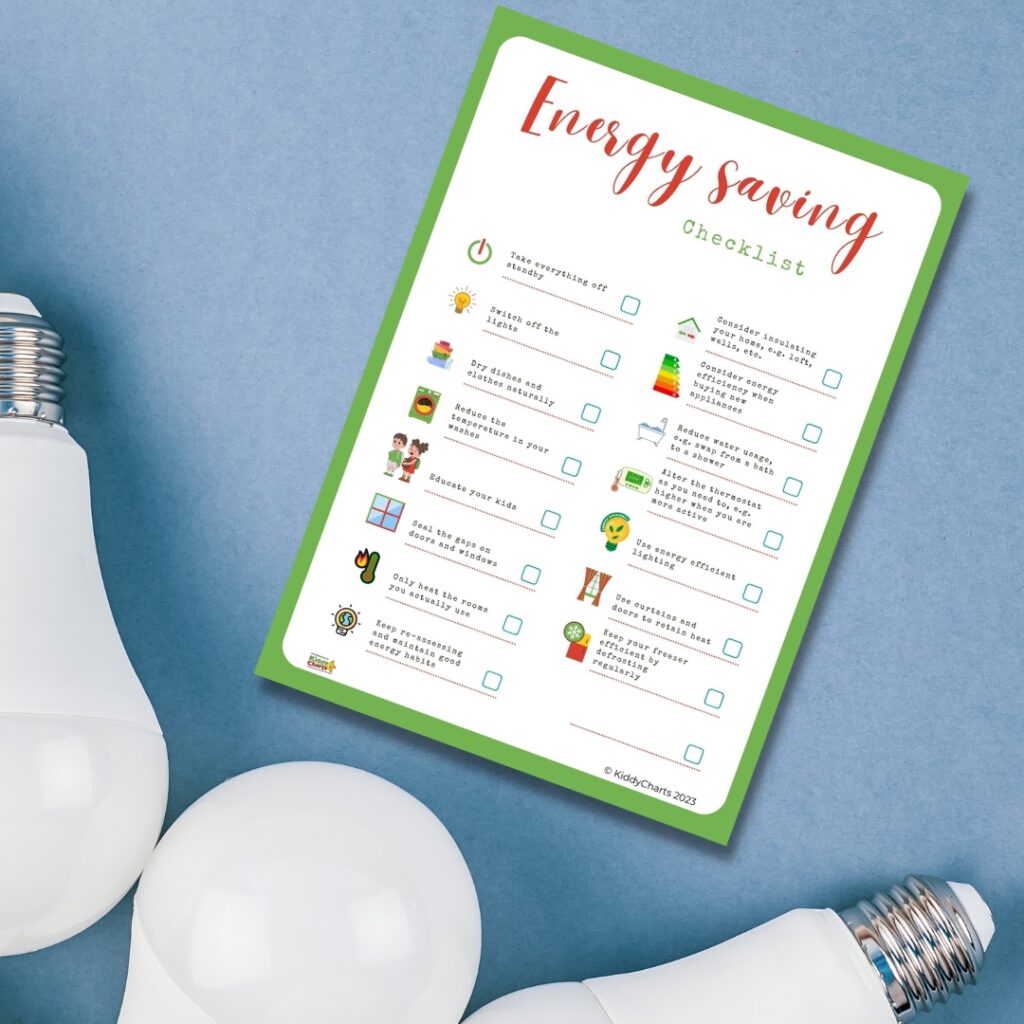
What does the how to conserve energy at home checklist look like
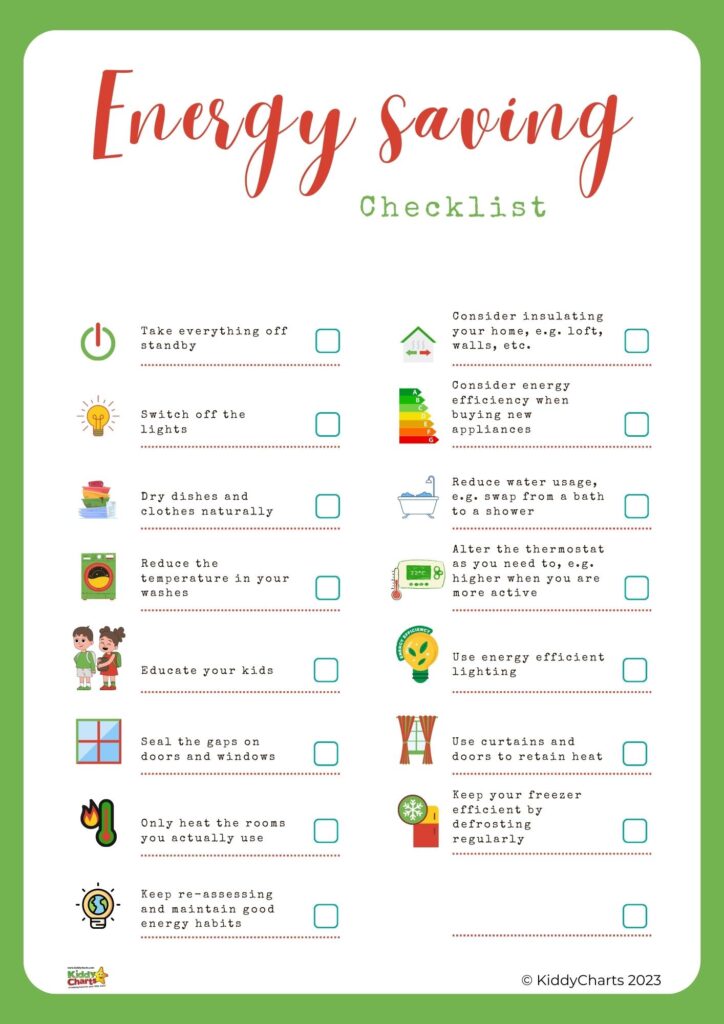
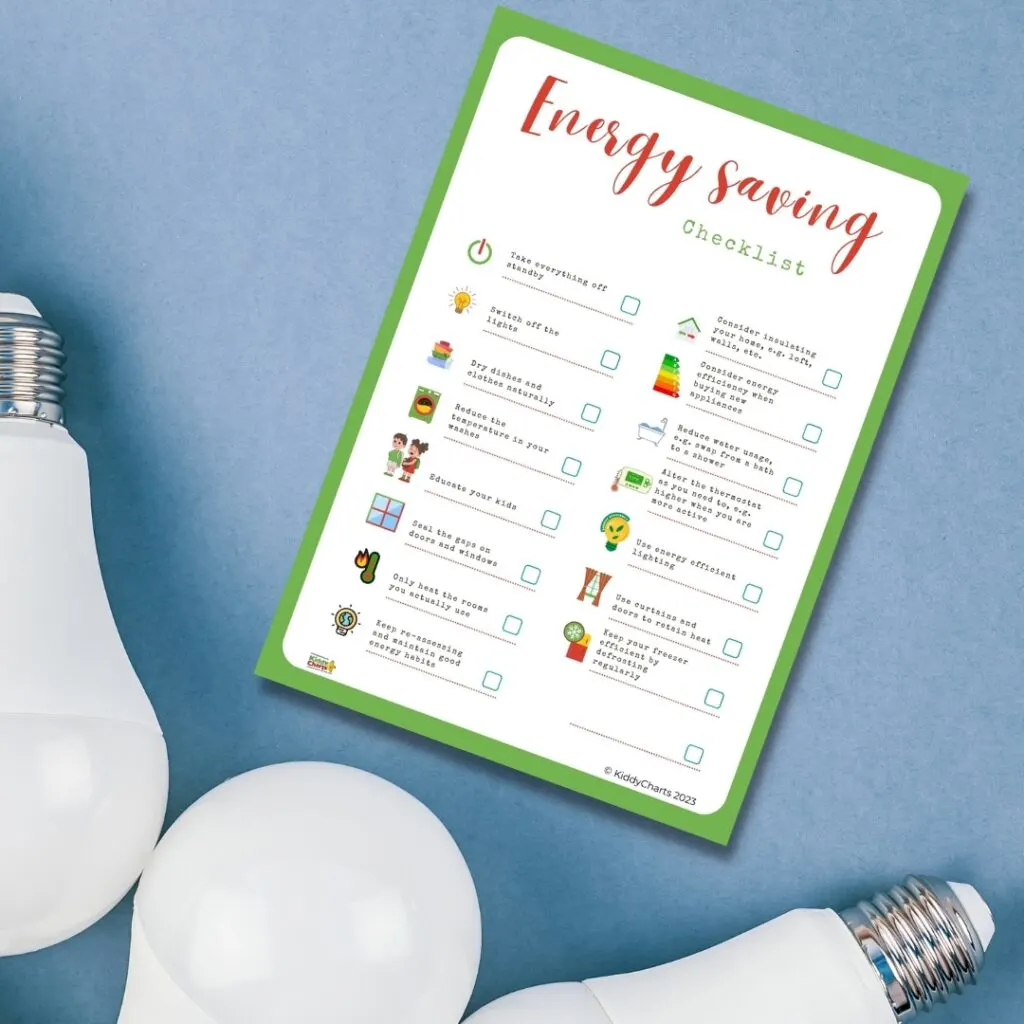
We’ve run through everything that is on the above – and you can see we have presenting it in our usual brand style with some very funky little icons to get you excited. Hopefully this will help you to remember what you are committing too. Why not print out the checklist and stick it on your family fridge!
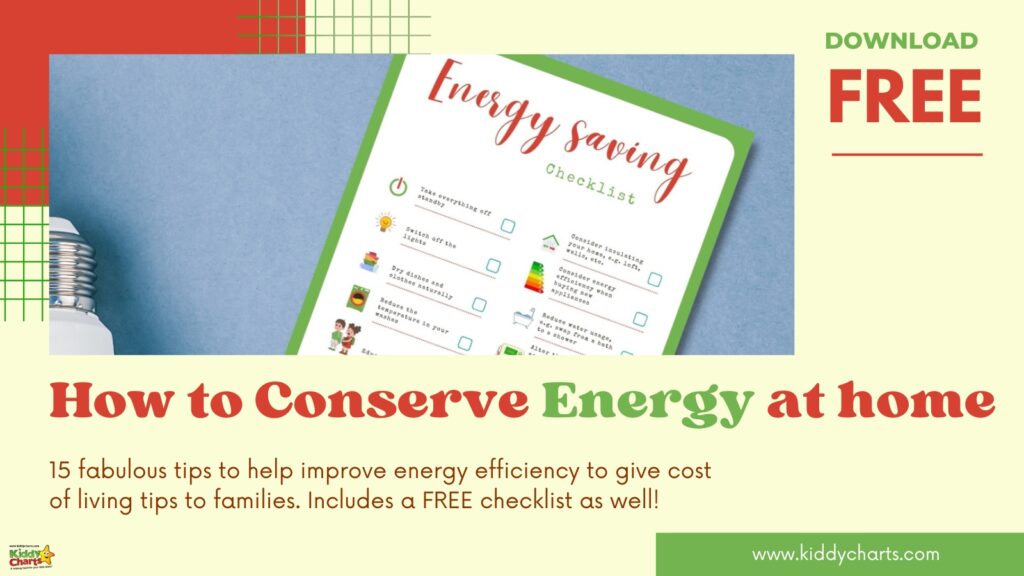
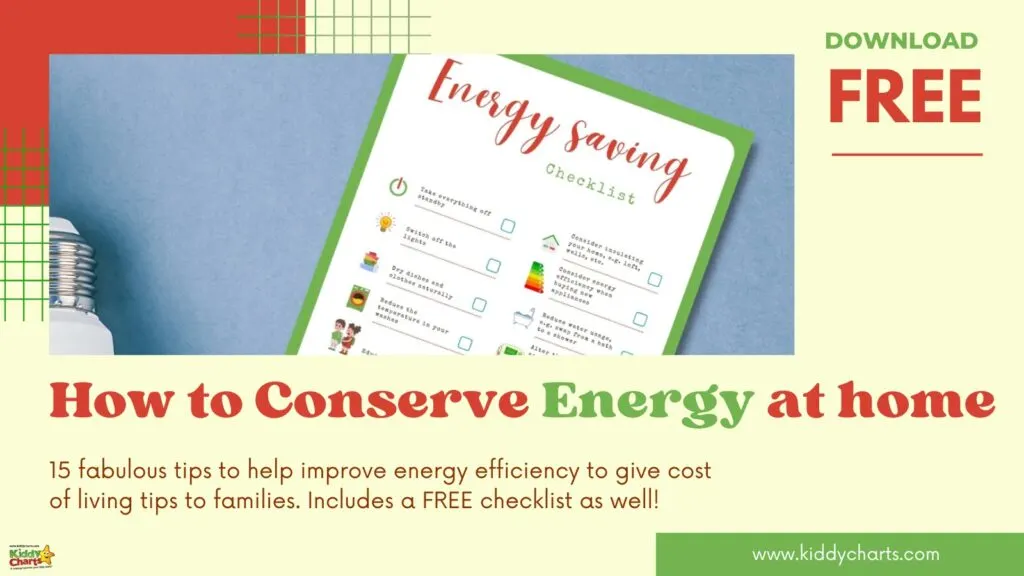
To download this, just click on the image or the button below, and it is yours:
We hope you like this – if you do, why not take a look at some of the other money saving articles that we have on the site?
Budgeting content on KiddyCharts
Here are some other ideas about budgeting on our site - why not go and take a look?


Simple tips for budgeting when you are starting a family
Ideas for budgeting when you are looking to start a family.


4 rules to live by for feeding a family on a budget
Great rules to live by when you are feeding a family to a tight budget.


Six week family meal plan
An amazing six week meal plan to help you with your budgeting - we KNOW this will make a massive difference to you all.
Or sign up to our weekly newsletter too?
We’d love to see you again soon, so come back whenever you want.
Take care,
Helen
Helen Neale

Helen is a mum to two, social media consultant, website editor and a qualified counsellor with experience of working with both children and adults. She is a registered member of the British Association of Counselling and Psychotherapists, with her own private practise. She also freelances with her local Mind organisation. Since giving up being a business analyst when juggling travel, work and kids proved too complicated, she founded KiddyCharts so she could be with her kids, use those grey cells at the same time, and supplement her counselling income. KiddyCharts has reach of over 680k across socials and the site. The site works with big family brands to help promote their services, as well as offering free resources to parents of kids under 10. She is a specialist counsellor for neurodivergent individuals and brings this expertise to her resources and the site. She is also an ADHDer herself. KiddyCharts gives 51%+ profits to charities, focused on supporting mental health and a community in Tanzania Helen has also worked as a digital marketing consultant (IDM qualified) with various organisations, including Channel Mum, Truprint, Talk to Mums, and Micro Scooters. She loves to be creative in the brand campaigns she works on. Get in touch TODAY!